Why fossil fuel subsidies survive
In brief: Ending fossil fuel subsidies is one of the most direct ways to cut emissions, so why do they persist? The answer lies less in weak leadership than in the system around them: jobs, regional economies and public revenue all depend on arrangements that make reform genuinely difficult, which is how Australia has ended up funding the energy transition and the fuels it is meant to replace at the same time. This article looks at how that system works, why it defeats even reforms with broad support, and how a transition might be designed so that each step makes the next one easier, before dissatisfied voters are handed reasons to stop it altogether.
As climate change evidently intensifies across the planet, the case for transitioning away from the fossil fuel energy systems driving it grows stronger. One way of doing so is to end governmental financial support to fossil fuel industries, commonly known as subsidies. Yet this is not happening.
I’ve been wondering for a while why governments continue to subsidise fossil fuels when the need to reduce greenhouse gas emissions has become so clearly urgent. On the surface, it appears difficult to justify. Australia has committed to reach net zero emissions and governments are spending billions of dollars expanding renewable energy, while the physical effects of climate change become harder to ignore. Yet public policy continues, at the same time, to lower the cost of producing or using coal, oil and gas.
This is more than an apparent contradiction in government policy. Subsidies matter because prices influence behaviour: when a government makes a product cheaper, whether through the tax system or through public spending on supporting infrastructure, households and businesses tend to use more of it than they otherwise would. Investors are also more likely to put money into the industries receiving that support, while competing technologies must work harder to become commercially attractive. The effects accumulate over time through millions of decisions about vehicles, machinery, buildings, industrial processes and energy infrastructure.
This is why the OECD and other international institutions have repeatedly called for inefficient fossil fuel support to be phased out. Their concern goes beyond the amount of public money involved. Fossil fuel support increase emissions and make climate mitigation more expensive, while weakening the incentive to invest in cleaner technologies. Removing it would not solve climate change on its own, but it would change one of the basic signals running through the economy. It would make fossil fuel use less attractive and allow alternatives to compete on a fairer footing.
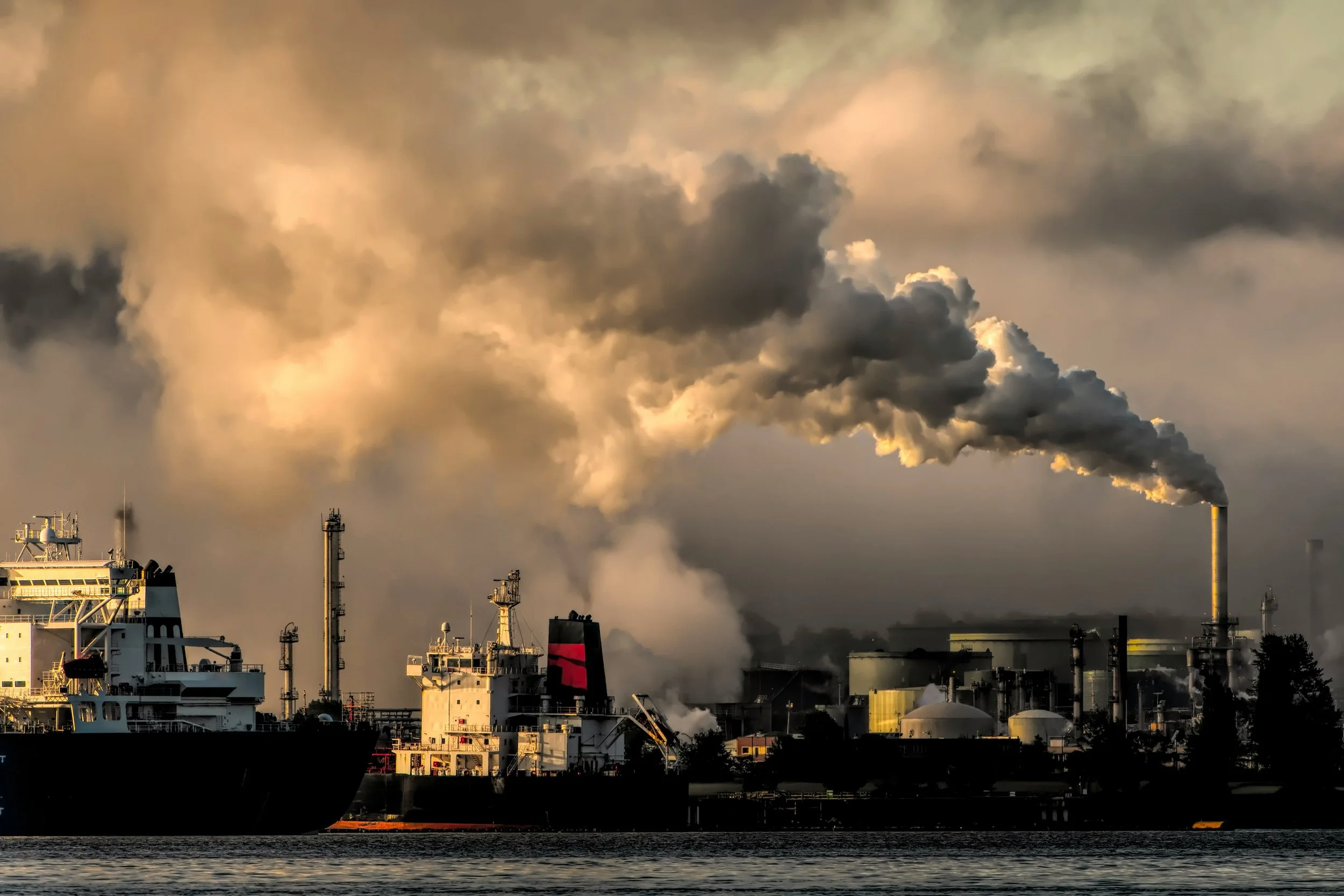
(Picture from Chris LeBoutillier)
What do we mean by a fossil fuel subsidy?
The term itself can be confusing because most people hear the word subsidy and imagine a government writing a cheque to a coal or gas company. Direct payments do occur, but much of the support is less visible. It often arrives through the tax system, or through public spending on infrastructure that principally benefits fossil fuel production and use.
There is also genuine disagreement over definitions. Australia’s Fuel Tax Credits Scheme, for instance, refunds the fuel excise paid on diesel used in machinery, heavy vehicles and other activities that take place away from public roads. Environmental organisations generally classify the scheme as a fossil fuel subsidy because it lowers the effective cost of diesel, in particular for fossil fuel and mining industries. Industry groups and successive governments argue that it is a tax credit rather than a subsidy, because the fuel excise was historically associated with road funding and should not apply to fuel used off-road.
The distinction is relevant when debating tax policy, but it should not obscure the practical effect. Whatever label we use, the scheme makes diesel cheaper for major users than it would be without the credit, and that influences business decisions. In 2025–26, the Australia Institute estimated that Australian federal and state governments provided $16.3 billion in spending and tax concessions to fossil fuel producers and major users, including $10.8 billion through the Fuel Tax Credits Scheme. Those estimates use a broad definition and are contested by industry, but they give some sense of the scale of the arrangements involved.
A simple analogy may help. Imagine that a government wants people to buy more electric vehicles, and invests heavily in charging stations and purchase incentives, while also maintaining a discount on petrol with no end date. Both policies can exist at the same time, and during any managed transition some overlap is unavoidable. But this sends a signal. A discount that will never expire tells drivers and investors that nothing is going to change, and it works against every dollar spent on the alternative. Fossil fuel subsidies operate in much the same way: it is their permanence, rather than their existence, that undermines the transition, because governments are encouraging renewable energy while telling markets the fuels it replaces will stay cheap indefinitely.
Why removing subsidies appears so attractive
From a climate perspective, removing subsidies has a straightforward appeal. When fossil fuels lose their artificial price advantage, the price signal replaces much of the regulation that would otherwise be needed, and government does not need to prescribe every decision made by every household or business. Faced with higher costs, some users cut consumption or run their operations more efficiently, while others switch to alternative technologies altogether. Investors anticipate these shifts and move their capital ahead of them. Governments can then use some of the savings or additional revenue to support lower-income households and to develop alternatives in regions undergoing economic change.
It can also have an effect relatively quickly. Building new electricity transmission or replacing industrial infrastructure can take many years. Tax settings can be changed much faster. Even where consumption does not fall immediately, the expectation that fossil fuel support will decline changes the economics of long-lived investments. A freight company deciding whether to replace a diesel fleet, or a manufacturer considering electric heat, will make a different calculation if it knows that fossil fuel concessions will progressively disappear.
This does not mean that subsidy reform is painless, or that all fossil fuel support should be removed in exactly the same way. Some measures reduce household energy bills or protect essential services, and abrupt changes can be highly regressive. France discovered this in 2018, when a fuel tax increase that fell hardest on rural households with no alternative to driving produced the Yellow Vest social movement, leading to a clash between those who fear “the end of the world” and those who fear “the end of the month”. In the end, the fuel tax increase was abandoned, and much of the good will for energy transition eroded in the process. Ecuador and Nigeria met similar resistance when subsidies were removed overnight. The OECD itself argues for better targeting of assistance towards those who genuinely need it. The larger principle is that support should be directed towards households and the transition, rather than preserving fossil fuel consumption as an end in itself.
The answer changes once we look at the wider system
Given the economic logic, it is tempting to see the persistence of fossil fuel subsidies primarily as a failure of political will. Political courage certainly matters, as do lobbying and the close financial and political relationships between governments and major industries. Yet those explanations do not fully account for why governments of different political persuasions, in Australia and elsewhere, find reform so difficult.
The difficulty becomes clearer when we step outside climate policy and consider the other responsibilities governments are trying to manage. Australia remains a major exporter of fossil fuels. The Australian Government’s June 2026 Resources and Energy Quarterly forecast export earnings of approximately $38 billion from metallurgical coal, $30 billion from thermal coal and $59 billion from liquefied natural gas in 2025–26. Together, that is around $127 billion in export income. These figures are unusually high partly because of global energy market disruption due to the war with Iran, but they illustrate the economic weight of the industries involved.
Those earnings support company profits, wages, tax revenue and state royalties, but the effects extend much further. Mining and gas projects sustain a long chain of suppliers and contractors, from engineering firms and ports through to maintenance and professional services. In parts of the Hunter Valley, Central Queensland and Western Australia, they also support local shops, apprenticeships, sporting clubs and community organisations. A fossil fuel industry extends well beyond its mines and export terminals; over time, an entire social and economic ecology develops around it.
This is why transition debates can sound so different depending on where people are standing. For someone looking principally at climate science, the continued expansion or subsidisation of fossil fuels appears reckless. For a worker or small business in a resource-dependent community, the same proposal may raise questions about income, housing, identity and whether their children will have a reason to remain in the region. These concerns are then often exploited by industry and politicians, but they are not invented. They are part of the reality any durable transition has to address.
The Fuel Tax Credits Scheme shows how quickly the effects spread beyond mining. Agriculture, freight, construction and other sectors also use large quantities of diesel. Removing the credit in a single step would increase operating costs throughout those sectors. Some firms would absorb part of the cost or invest more quickly in alternatives; others would pass it on through higher prices. The reform could still be justified, particularly if implemented progressively, but it would interact immediately with the cost of living and with industries that have limited alternatives available today.
Governments are also trying to maintain a reliable electricity system while ageing coal-fired power stations retire. Renewable electricity is now the least-cost form of new generation in much of Australia, but the transition requires more than adding solar and wind farms. It also requires transmission, storage, demand management, new market arrangements and faster planning and approvals. Delays in any one of these areas can leave governments exposed to electricity price rises or reliability concerns, which opponents then use as evidence that the transition itself is failing.
Add inflation, international competitiveness, energy security and elections to this picture, and the apparent contradiction begins to make more sense. The benefits of reducing emissions are widely shared and accrue over many years, while the costs of a particular reform may be immediate and visible, and concentrated in a small number of communities or industries. Those with the most to lose have a strong incentive to organise against change. Those who benefit from a safer climate are far more numerous (all of us!), but the benefit to each person is less direct and often less visible.
The electoral consequences follow from the same arithmetic. A transition that raises costs or removes livelihoods without a credible replacement does more than generate protest; it creates voters available to any party promising to stop it. One Nation built its platform on that promise long ago, and the Coalition has now abandoned its commitment to net zero. Neither needs to win government to slow reform. They only need to make marginal seats feel contested. A poorly managed transition therefore carries a double cost: the immediate harm to the communities affected, and the political licence it hands to those who would continue the current system regardless of what it costs the climate.
Why systems resist change
Looking at the issue this way changed the question for me. Rather than asking only why governments continue making decisions that appear inconsistent with their climate commitments, it is more useful to ask what it is about the wider system that keeps producing those decisions.
Australia’s fossil fuel economy is sustained by reinforcing relationships. Subsidies and other forms of support lower costs and encourage investment. Investment creates jobs and export income, along with the infrastructure that locks both in. Those benefits increase the political influence of the industry and the dependence of particular regions on it. That influence helps preserve favourable policy settings, which encourage further investment. None of this requires a conspiracy or a single actor controlling the system. It emerges from many organisations and individuals pursuing understandable interests within the arrangements they have inherited.
This is what makes systems thinking useful. It directs our attention away from a search for one cause or one villain and towards the relationships between policy, markets, infrastructure, institutions, communities and political power. It also reminds us that changing one element can produce consequences elsewhere, including consequences that generate enough public opposition to reverse the original reform.
There is, however, an obvious risk in this argument. Every part of a systems transition can encounter the same lobbying, institutional inertia, short-term thinking and political caution that have protected fossil fuel subsidies. Transmission projects face community resistance. New industries compete for public funding. Planning reform creates new conflicts. Workforce programs take time, and governments may keep consulting while emissions continue to rise. If systems thinking means waiting until every dependency is resolved and every interest is satisfied, it can easily become a more sophisticated justification for paralysis.
A systems approach therefore cannot replace political leadership. Governments still have to make choices and confront interests that benefit from the current arrangements. Some assets will lose value and some industries will contract; not every demand for compensation will be reasonable. The value of systems thinking lies elsewhere: it can help governments understand which changes need to occur together and in what sequence, and where public support can reduce genuine harm without preserving fossil fuel dependence indefinitely.
The present moment illustrates the difficulty. The Australian Government has built much of the new energy system's scaffolding while leaving the old system's supports in place. A cap on fuel tax credits for the largest claimants, with amounts above the cap retained only where reinvested in electrification, was reportedly under consideration for the 2026 budget and had been endorsed by more than 250 Labor branches. It was deferred when conflict in the Middle East raised fuel security concerns. Each part of that decision is defensible on its own terms, and that is precisely what a reinforcing system produces: there is always a defensible reason to leave the supports standing. A country can spend billions building a new energy system and billions sustaining the old one at the same time, but the second spending works against the first.
Designing a transition that creates its own momentum
The question then shifts from how to overcome every source of resistance towards how to create a transition in which each successful step makes the next one easier. Rather than searching for a perfect plan before acting, it means deliberately building new reinforcing relationships that can gradually become stronger than those supporting the old energy system.
Consider the difference between removing a diesel concession tomorrow and announcing that it will decline predictably over ten years while governments help affected industries electrify. A clear timetable gives businesses an incentive to change, while public finance and infrastructure make alternatives possible. Early adopters expand the market for new equipment and services, which lowers costs and improves availability. As more businesses make the shift, the political constituency defending the old concession becomes smaller and the constituency benefiting from the new system becomes larger.
The same logic applies to regional economies. Waiting until a mine or power station closes before looking for replacement employment almost guarantees anxiety and resistance. Investing earlier in renewable energy, clean manufacturing, ecological restoration and locally determined economic development allows communities to see what comes next. Workers can retrain while still employed and local businesses can enter new supply chains, while regional institutions shape the transition rather than merely responding to decisions made elsewhere.
Ownership also matters. Communities asked to host transmission lines or large renewable projects may reasonably question why they should carry the disruption while most of the financial benefit leaves the region. Local equity, benefit-sharing agreements, lower local electricity costs and genuine participation in planning can turn renewable infrastructure from something done to a community into something from which it derives lasting value. That does not remove every disagreement, but it changes the relationship between the project and the place.
At the national level, the same sequencing is required across electricity generation, storage, transmission, skills, industrial policy and market design. Coal-fired power cannot retire smoothly if replacement generation cannot connect to the grid, and businesses will not electrify if power is unreliable or the required equipment is unavailable. Investors will hesitate if targets and rules change after every election. Each bottleneck slows the others, but each resolved bottleneck also increases confidence and makes further investment more likely.
Over time, this can create a different feedback loop. More renewable investment supports more jobs and local revenue. Greater experience lowers costs and improves delivery. Visible benefits increase public confidence. Confidence allows governments to adopt stronger policy. Stronger policy attracts more capital and innovation. The transition becomes less dependent on repeated acts of political courage because a growing number of people and organisations have an interest in its continuation.
What a regenerative lens adds
Systems thinking helps explain how these relationships work, but it does not by itself tell us what kind of energy system we should be trying to create. A system can become efficient and self-reinforcing while still concentrating wealth and leaving communities with little control over decisions that affect them. This is where I think a regenerative lens becomes useful.
Much of climate policy is framed around reducing harm: fewer emissions, less pollution, lower energy use and less dependence on fossil fuels. All of this remains necessary. A regenerative approach asks an additional question: can the process of transition improve the health and capacity of the social, economic and ecological systems involved? Rather than judging success only by tonnes of carbon dioxide avoided, it considers whether regions have become more economically diverse, whether communities have greater agency, whether degraded land and water have been restored, whether local knowledge and skills have grown, and whether the benefits of the new system are shared more fairly.
That changes how public investment is designed. Money redirected from fossil fuel support could help households reduce energy costs permanently through efficiency and electrification, including rooftop solar, rather than temporarily lowering the price of fuel. In resource regions, transition funding could support industries that build on local strengths instead of importing generic projects with little connection to place. Mine rehabilitation, biodiversity recovery, First Nations-led land management and renewable energy development could be planned together, creating ecological as well as economic value.
A regenerative lens also places greater importance on relationships. Energy transitions are often described as technical projects involving megawatts, transmission corridors, market rules and investment. They are also social processes that depend on trust, and on the capacity of institutions and communities to learn. Communities need meaningful influence over decisions. Governments need institutions able to coordinate across departments and remain engaged beyond a single funding round. Industry needs clear expectations, while workers need credible pathways that do not treat them as an afterthought.
This does not make the transition free of conflict. Regeneration should not become another comforting word that hides difficult choices or suggests everyone can receive everything they want. Its contribution is to broaden the purpose of systems redesign. The objective goes beyond substituting renewable energy for fossil energy while leaving every other relationship untouched; the transition can also strengthen places and distribute capability and value more widely, while restoring some of the ecological systems on which the economy ultimately depends. Better yet, the transition should do exactly this.
Beyond political will
Seen from this perspective, fossil fuel subsidies remain an important target for reform, but their persistence is not explained only by weak leadership. They sit inside an economic and political system that has developed over generations and continues to reward fossil fuel production and use. Removing them without attending to that wider system can create hardship and backlash. Waiting until every problem has been solved before reforming them would create a different form of failure.
The more promising path is to combine a clear direction with deliberate sequencing. Governments can establish declining support for fossil fuels, protect households rather than fuels, invest in alternatives before costs rise, and give affected workers and communities a meaningful role and stake in what replaces the old system. They can coordinate infrastructure with industry and workforce policy so that progress in one area makes progress elsewhere easier. They can also use a regenerative lens to ensure that the transition creates more than a lower-emissions version of the economy we already have.
Political will remains necessary because no system redesign occurs without conflict and the exercise of power. Yet courage becomes more effective when it is supported by the institutions and relationships that allow a reform to endure. The purpose of a systems approach is to make hard choices cumulative rather than to avoid them, so that each one changes the conditions surrounding the next.
Rather than persuading governments to make better decisions one at a time, perhaps the real challenge is to redesign the system so that those decisions become easier to make and harder to reverse, and so that their benefits reach the people and places most affected by them. If the energy transition can begin to generate its own economic, political, social and ecological momentum, removing fossil fuel subsidies will stop depending on governments repeatedly choosing the harder path and become, increasingly, the obvious next step in a transition already under way.
We can redesign the system deliberately, while sequencing and fairness remain possible, or wait for a destabilised climate to redesign it for us, with neither.
Need help applying these ideas inside your organisation? I work with boards and executive teams to build crisis-ready capability across leadership, culture and systems.