My non-thinking chair - The thinking person's guide to not thinking
In brief: We are losing the capacity to do nothing — and it is costing us more than we realise. This article makes the case for deliberate, unstructured idleness: what neuroscience says happens when you stop directing your brain, why the Dutch have a word for it, and why your smartphone is systematically dismantling the mental conditions that creativity and original thinking depend on. No meditation required. Just a chair, a corner, and two minutes you were probably going to waste on your phone anyway.
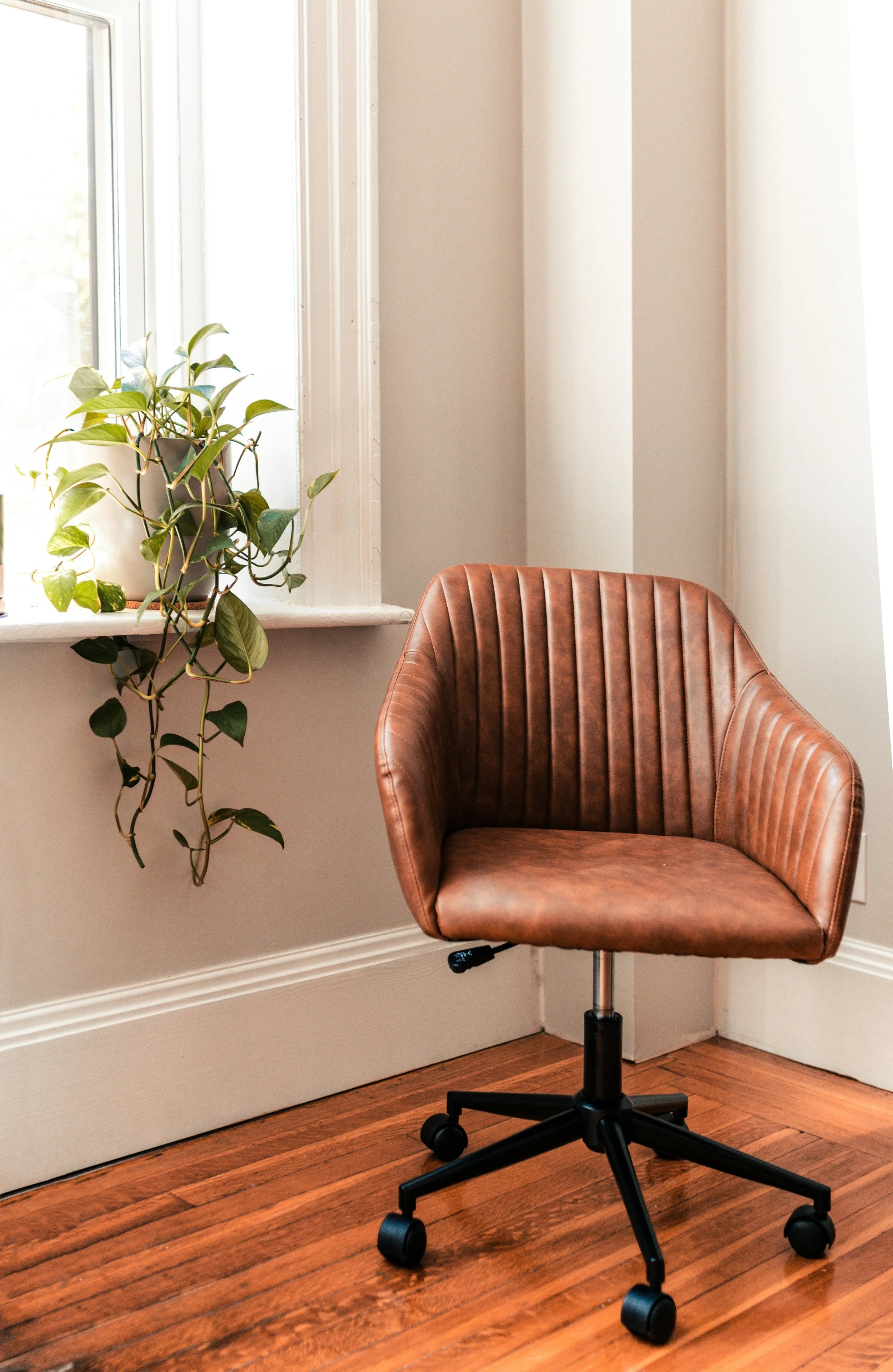
There is a chair in the corner of my office that has no desk near it, no screen facing it, and nothing within easy reach. I sit in it several times a day — sometimes for two minutes, sometimes for ten — with no phone, no notebook, no agenda. I don't meditate. I don't try to solve anything or arrive anywhere in particular. I just sit, and let whatever is happening in my mind happen without direction or interference.
This is where most of my best ideas come from.
I mention this as someone who spent years as a university lecturer teaching students how to think — critical thinking, critical literacy, creative thinking, awareness of cognitive bias, the careful evaluation of evidence and argument, the study of various references and sources, etc. I have not abandoned any of that. Those skills matter more now, in an era of accelerating misinformation and disinformation, than they ever have. But I have come to understand something that my academic training did not prepare me for: that the quality of thinking depends, in ways that are not immediately obvious, on the quality of not thinking. The chair is not a break from the work. It is part of the work — and a very important one at that.
What your brain does when you leave it alone
(Picture by Kelly Sikema)
For most of the history of neuroscience, the brain at rest was considered the brain off duty. Resting data was collected primarily as a baseline — something to compare against the real activity happening when people were solving problems or paying attention to tasks. The assumption, rarely examined, was that a brain not directed at anything was a brain doing nothing useful.
That assumption turned out to be wrong in a way that reframes almost everything that follows from it.
When you stop directing your attention at a specific task, a network of brain regions becomes significantly more active, not less. Researchers eventually named it the default mode network — though for years before that, when they first noticed it activating during rest, they called it the task-negative network, which tells you something about how deeply the assumption of productive busyness was embedded in the field. Subsequent research has established that this network is central to some of the brain's most consequential work: creative association, the generation of original ideas, memory consolidation, self-reflection, and the construction of mental narratives about the future. It is, in a meaningful sense, where insight lives.
The relationship between the default mode network and creativity is now sufficiently established that researchers describe highly creative people not as those who think harder or faster, but as those whose brains switch more fluidly between directed thinking and open, unstructured mind-wandering.
Originality does not surface under pressure or effort. It surfaces in the gaps — in the chair, on the walk, in the shower, in the middle of a conversation you weren't trying to have. The brain needs those gaps the way the body needs sleep: not as absence, but as a different and necessary kind of activity.
This is what my non-thinking chair is for. Not rest in the passive sense, but the active, generative idleness that directed attention cannot replicate and that most of us have systematically eliminated from our days.
Niksen — the Dutch art of doing nothing
The Dutch have a word for what I do in my chair, though I arrived at the practice independently and only encountered the concept later. Niksen — derived from the Dutch word niks, meaning nothing — refers to doing nothing deliberately, or at least doing something with no purpose or outcome attached to it. Looking out a window. Sitting with a cup of tea and no particular thoughts. Letting the mind wander without trying to steer it anywhere.
In Dutch, the word was historically used as a mild pejorative. Its lexical cousin niksnut roughly translates as a layabout, someone who contributes nothing — which tells you something about how deeply even Dutch culture, for all its reputation for balance, was shaped by the same productivity bias that afflicts most of the modern world. In recent years, as research on burnout, stress and the neuroscience of rest has accumulated, the concept has been reframed. Niksen is not laziness. It is, as researchers are increasingly describing it, a form of cognitive maintenance — the mental equivalent of allowing soil to lie fallow so that it can recover its capacity to produce.
The formal research base specifically on niksen is still developing — the concept is recent enough and amorphous enough that dedicated studies are limited. What exists is a substantial body of evidence on rest, mind-wandering and unstructured mental time more broadly, which points consistently in the same direction: deliberate idleness reduces cortisol, restores cognitive resources, promotes neural plasticity, and creates the conditions in which the default mode network can do the work described above. A coaching study in the Netherlands found that people who practised niksen regularly reported decreased stress and increased happiness compared to those who did not.
It is worth distinguishing niksen from mindfulness, because they are often conflated and are actually quite different in their mechanisms. Mindfulness asks you to be present — fully aware of what is happening in the moment, attentive to sensation, thought and feeling as they arise. Niksen asks something closer to the opposite: to be absent, unaware, unattentive, to let the mind go where it goes without observation or guidance. Both have genuine value. Neither is a substitute for the other.
The activities many people find most restorative — surfing, running, gardening, crafting, listening to music, losing yourself in a novel — share something with both niksen and with each other: they suspend the ruminative, circling, self-referential thinking that exhausts us, whether through deliberate emptiness or through absorption so complete that everything else falls away. Most people already have some version of this practice in their lives. The problem is that they haven't recognised it as one, and so haven't protected or prioritised it — and something is now actively working to displace it. The difference with niqsen is that these activities still require something of you — a wave to catch, a page to turn, a rhythm to follow — whereas sitting idle requires nothing at all, which is precisely what makes it harder and, for the brain, differently valuable.
The thing that is eroding all of this
Here is the experience I suspect most people reading this will recognise: you are sitting somewhere, not doing anything in particular, and within a few seconds — rarely more — your hand moves toward your phone. Not because there is something specific you need to check or because you are expecting an important message. Simply because the stillness produced a faint discomfort, and the phone is the fastest available way to resolve it.
This reflex is not trivial. Researchers have a name for the underlying condition: rest intolerance — a psychological state characterised by negative feelings during unoccupied time, accompanied by an inability to simply be still without the intrusion of anxious or ruminative thinking. The smartphone has become the primary escape route from that discomfort, which means the discomfort itself is never examined, never resolved, simply bypassed — repeatedly, automatically, dozens of times each day. Some data suggests people check their phones an average of 58 times daily. In Australia, three in four people check social media before getting out of bed in the morning, and four in five check it again before going to sleep at night.
The neurological consequence is direct. The default mode network requires unstructured, screen-free time to activate properly. Every interruption — every check, scroll, brief diversion into a notification — displaces the mental conditions that creative and restorative thinking depend on. The brain that is perpetually available to external stimulation is a brain that never quite reaches the state where its most generative work happens. The insights don't come. The restoration doesn't occur. The capacity for stillness, unpractised, gradually atrophies.
What is being lost is not just productivity in any narrow sense. It is the capacity to dream, to imagine, to follow a thought somewhere unexpected, to be bored in the fertile way that boredom — properly tolerated — has always functioned. Children who are never allowed to be bored don't learn to inhabit their own minds. Adults who fill every gap with a screen are in the same position, and the consequences accumulate in ways that are slow to become visible and hard to reverse.
Two minutes is enough
The most common response when people encounter ideas like these is a version of: I understand the value, but I don't have the time or the headspace or the energy for it. This response, while understandable, misreads what the practice actually requires.
You do not need twenty minutes of morning meditation. You do not need silence, a retreat, a dedicated wellness routine, or any particular state of mind before you begin. You need a chair — or a bench, or a patch of grass, or a spot by a window — and the willingness to sit in mild discomfort for two minutes without reaching for your phone.That is the entire practice, at its most basic. The discomfort is not a sign that you are doing it wrong. It is the practice — the moment of choosing to remain still rather than escape into stimulation, which over time rebuilds the capacity for exactly the kind of unstructured mental time the brain needs.
The value compounds across a day rather than arriving in a single dedicated block. Two minutes between meetings. Five minutes after lunch. A few minutes in the car before going inside. None of these require time you don't have. They require only the decision not to fill the available gaps with something else — which is, it turns out, a harder decision than it sounds, because the pull toward filling them is now very strong and very well-designed.
My chair is there because I made it a fixed point — a physical location that holds the intention when my own willpower doesn't. Walking past it is a reminder. Sitting in it is almost automatic now, in the way that any repeated practice eventually becomes. The ideas that have emerged from it, including the one that led to this article, have been worth considerably more than the time they required.
Non-thinking enriches thinking
I want to be careful not to oversell this, because that would undermine the point. The chair is not magic. Niksen is not a productivity hack. The default mode network does not reliably deliver brilliant insights on demand. What it does, given the conditions it needs, is work — quietly, below the surface, on the problems and questions and connections that directed attention has been circling without resolving.
The critical thinking I spent years developing and teaching has not been replaced by any of this. The analytical tools, the habits of rigorous evaluation, the awareness of bias and the discipline of evidence — these remain essential, and in the current information environment, more essential than ever (actually you can read a piece I wrote about this here). What non-thinking adds is not a replacement for any of that but a layer beneath it: space for originality to surface, depth that effortful thinking alone cannot reach, and a quality of restoration that makes the directed thinking, when it returns, sharper and more generative than it would otherwise be.
The two practices need each other. The thinking person who never stops thinking is not thinking as well as they could. The chair is where I discovered that — and where, every day, I am still discovering it.
Sitting idle, doing nothing, just feels good. Not optimised, not intentional, not productive in any way that would satisfy a performance review — just good, in the ordinary human sense of the word. In times when everyone is too busy and has too little headspace, choosing to do nothing is its own quiet act of resistance. And it just so happens to be among the most generative things you can do with your time — but only if you allow it to achieve nothing at all.
So here you go, for whatever it is worth from someone who used to teach critical thinking for a living: you have permission to do nothing. Guilt-free. The brain will thank you later, in its own time, in its own way.