When Bunnings becomes essential infrastructure
In brief: When a major disaster is approaching, people don't reach to their resilience plan. They head to Bunnings, Woolworths, the local pharmacy and the hardware store. That behaviour reveals something important that the resilience conversation has largely missed: local businesses — large and small — are essential community infrastructure, and they are almost entirely absent from how we plan for disruption.
In the days and hours before a major flood or fire, something predictable happens. The Bunnings carpark fills up. The Woolworths shelves start emptying. The local pharmacy runs low on first aid supplies and prescription medications. People are not panicking. They are doing something entirely rational — going to the places they understand, instinctively, to be essential.
I have observed this pattern repeatedly across my career in disaster and emergency management. And what strikes me is not the behaviour itself but what it reveals. In the moment before disruption arrives, communities vote with their feet for what they consider critical infrastructure. They do not reach to their resilience plan — assuming they have one in the first place. They head to the businesses that have the supplies, the scale and the logistics to meet their needs.
The resilience conversation has largely failed to notice this — or at least to act on it. It talks extensively about community preparedness, social capital, emergency services capacity and recovery funding. It rarely talks about the businesses that communities instinctively turn to when things get difficult, as if commerce and community resilience were separate categories with no meaningful overlap.
They are not. And the gap between what people actually do when disruption arrives and what resilience planning formally acknowledges is a consequential blind spot in how Australia prepares for an increasingly disrupted future.
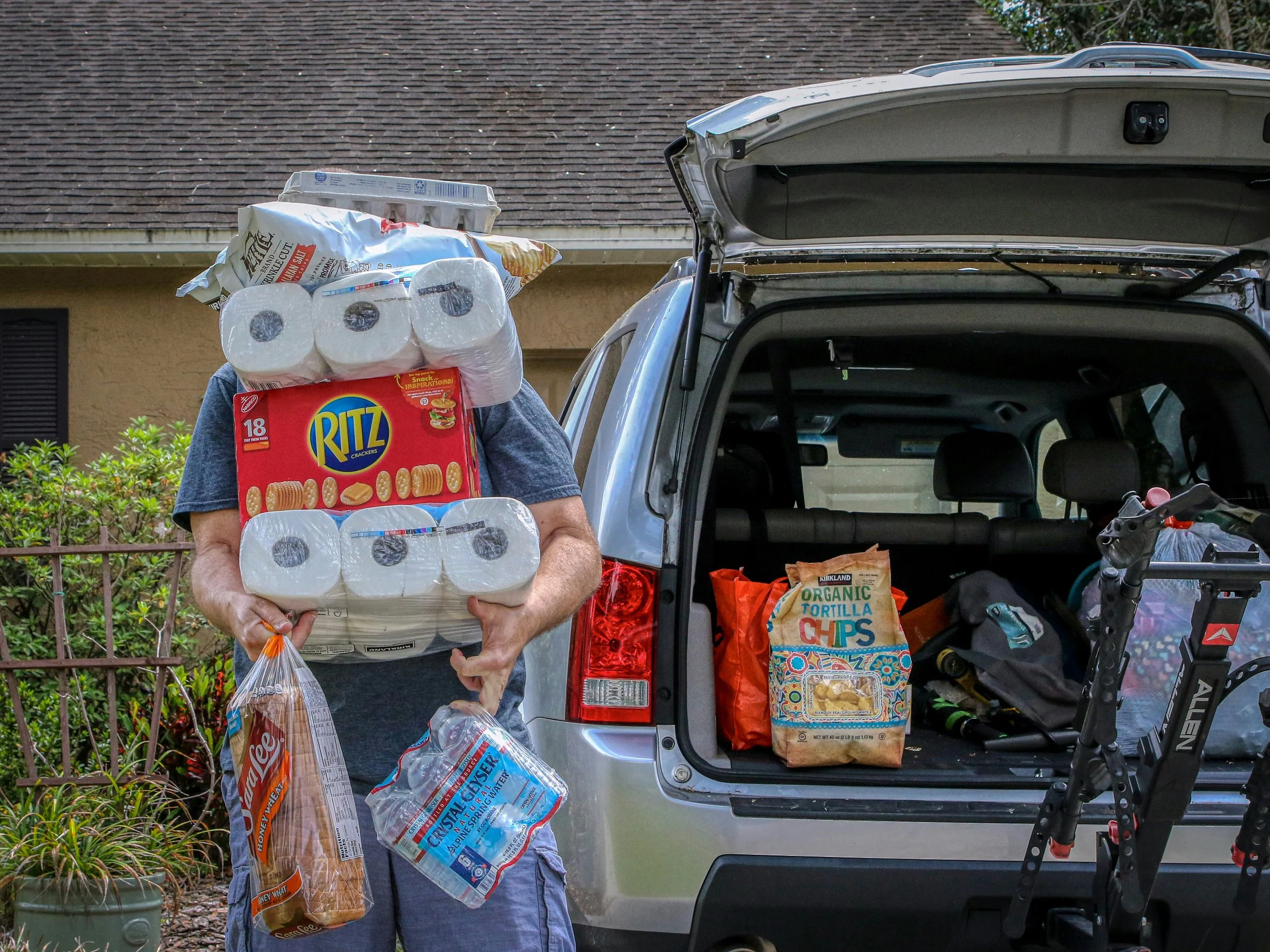
(Picture by Mick Haupt)
The invisible infrastructure
Think about what a functioning community actually requires on a daily basis: food, water, medicine, hardware, fuel, clothing, healthcare, financial services, communication, schools, roads, waste management (oh, and toilet paper too). Almost all of it is delivered through businesses — local, national and global — that rarely appear in resilience frameworks, community plans or disaster preparedness conversations.
The library gets mentioned. The community hall gets mentioned. The neighbourhood centre gets mentioned. The supermarket, the pharmacy, the hardware store, the GP clinic, the local accountant — the businesses that most people interact with most often and depend on most directly — are conspicuously absent from the conversation.
Resilience thinking in Australia emerged primarily from public sector and community sector traditions that are philosophically oriented toward collective welfare and public goods. Business tends to be treated as something that looks after itself — subject to market forces, motivated by profit, and therefore not requiring the same kind of deliberate support and integration that community organisations and government agencies do. This assumption is understandable. It is also, in the context of genuine community resilience, wrong.
The pharmacy is a business. It is also, in a post-disaster community, among the most critical services people need — and among the most likely to close if the building is damaged, the owner is displaced, or the revenue has dried up. The local accountant, bank and insurance broker are businesses. They are also, in the recovery phase, among the most important presences in a community navigating insurance claims, grant applications and financial decisions that will shape trajectories for years. The café and the pub are businesses. They are also the spaces where informal community connection happens, where people process shared experience, and where the social fabric that disaster research consistently identifies as the most important determinant of recovery is maintained and repaired.
Excluding businesses from the resilience conversation leaves a significant portion of the infrastructure that communities actually depend on unexamined, unsupported and unprepared.
What businesses actually do
Before a disaster arrives, certain businesses are performing a preparedness function that no resilience plan has formally assigned to them. Bunnings stocks generators, water containers, tarps and timber. Woolworths, Coles, Aldi and IGA hold the food reserves and supply chains that most households depend on. The local pharmacy holds the medications that people with chronic conditions need to survive an extended disruption. When people flood those businesses in the days before a disaster, they are drawing on commercial infrastructure that has been built and maintained for entirely commercial reasons — and that happens, in those moments, to be exactly what the community needs.
During a disaster, the businesses that remain open become anchors. The open supermarket, the functioning pharmacy, the hardware store still trading are not just commercial conveniences, but signs that the disruption is survivable, that supply chains are holding, that the community has not been abandoned. Their closure, conversely, accelerates the psychological and practical deterioration that compound crises produce.
After a disaster, business recovery and community recovery are not parallel processes. They are the same process. A 2025 peer-reviewed study found that post-disaster business recovery operates as a network, with certain businesses acting as recovery multipliers — their reopening accelerates the recovery of surrounding businesses through shared customers, service complementarities and physical proximity, which in turn accelerates the broader community's recovery. The practical implication is direct: supporting the right businesses to reopen quickly is a cost-effective investment in community recovery available, and it is consistently underfunded and undervalued in current frameworks.
What this means for businesses
If you own or lead a business that serves an essential function in your community — a pharmacy, a hardware store, a medical practice, a supermarket, a fuel supplier, a financial services firm — your continuity planning is not just a commercial matter. It is a community matter.
This is not an argument for businesses to take on responsibilities that belong to government or emergency services. It is an argument for businesses to understand the role they actually play — the role communities already recognise they play — and to prepare accordingly.
In practice this means really thinking through your vulnerabilities before the disruption arrives. What would take your business offline? How long could you operate without normal supply chains? What are your staff's capacity to function under genuine pressure? Do you have relationships with local emergency management organisations and community networks that would allow you to coordinate effectively when it matters?
It also means recognising the reputational and relational dimension of resilience. The businesses that remain open, that adapt quickly, that serve their communities under difficult conditions, build a depth of trust and loyalty that normal trading conditions rarely produce. The hardware store that stays open through a flood, the pharmacy that manages medication supply during an extended disruption, the café that becomes an informal community hub in the weeks after a disaster — these businesses are remembered. That is not a secondary consideration. It is a genuine competitive and community advantage.
What this means for planning and policy
For local government, emergency management agencies and resilience planners, the practical implications are straightforward even if they require a shift in how the conversation is framed.
Local disaster management plans should include business continuity as a core consideration. Which businesses are essential to community functioning in your area? What are their specific vulnerabilities? What would their closure mean for the people who depend on them? In the Northern Rivers, the months-long closure of supermarkets after the 2022 floods was not an outcome that had been adequately anticipated or planned for. It should have been.
Grant programs and subsidies for disaster resilience and recovery should explicitly include businesses — not just households and community organisations. Supporting a GP practice or a pharmacy to maintain continuity through a disaster is a community health investment, not a commercial subsidy.
Business owners and leaders should be in the room when resilience conversations happen — not as stakeholders to be consulted at the end of a process, but as essential contributors from the beginning. They have knowledge of supply chains, customer behaviour, local economic dependencies and community need that resilience planners rarely have access to. That knowledge is currently largely untapped.
The 2023 Australian Emergency Management Arrangements Handbook describes shared responsibility across government, community and business. The business dimension of that shared responsibility remains the least developed in practice. Closing that gap is not a complex policy challenge. It is primarily a matter of choosing to include in the conversation the businesses that communities have always known are essential — and treating their resilience as the community investment it actually is.
A simple test
There is a simple test for whether businesses are genuinely integrated into resilience planning in your community: find your local disaster management plan and search for the names of the businesses your community depends on. In most cases, they will not be there. That absence is not an oversight. It is a choice — one that communities and their planners make repeatedly, and will continue to make, until someone decides the conversation is worth having differently.