What security actually is — and why most people have it wrong
In brief: The way you understand who you are shapes the threats you perceive and the security measures you deploy. Those measures, in turn, reshape your identity. This is not a philosophical abstraction — it is a dynamic I observed directly in conflict zones across three continents, and it has direct implications for how we think about safety and security in the context of community resilience.
This is the second piece in a series exploring the difference between individualist prepping and community resilience. The first piece examined what the two approaches share, where they diverge, and what the evidence says about what actually works when things fall apart. This piece takes the argument further: what does genuine security actually require — and what does the way we approach it reveal about how we see ourselves and the world around us?
The central argument of this piece is simple, though its implications are not: the way you approach security shapes the security environment you end up inhabiting.
If you see yourself as isolated, surrounded by threats and responsible only for your own survival, you are likely to build a security posture based on separation, stockpiling and force. That posture may then make you more isolated, more visible as a target, and less embedded in the relationships that actually create safety.
If you see yourself as part of a community, you are more likely to invest in trust, intelligence, reciprocity and shared capacity. That relational posture gives you more warning, more options, more protection and better recovery when things go wrong.
In other words, your identity shapes how you perceive your environment — and how your environment responds to you shapes, in turn, who you become. The evidence for this — from disaster research, conflict zones and the sociology of violence — is more consistent than most people assume. This piece examines it.
The myth of the gun and the empty stomach
After publishing the first piece in this series, I received a number of comments making two related arguments, which reflect concerns I recognise and have thought about across many years of working in genuinely dangerous environments.
The first: when people are hungry enough, ethics disappear. Scarcity trumps solidarity. In the end, people will do whatever it takes to feed themselves and their families, and any community resilience model that doesn't account for this is naive about human nature.
The second: a single weapon pointed at you changes everything. Good intentions and community relationships are no defence against physical force. At a certain point, the only thing that stops a bad person with a gun is a good person with a gun.
I understand why these arguments feel compelling. They contain a real insight — genuine scarcity does change behaviour, and physical force is real and cannot always be talked or trusted away. But they also rest on a model of how violence works that is, in my experience and in the research, incomplete.
Both arguments imagine threat as a single, sudden, physical event that overrides all other considerations, and security as a binary condition achieved through sufficient individual force or sufficient individual stockpiling. That framing leads directly to the prepper model: stockpile enough food that hunger never becomes a lever against you, arm yourself so a weapon pointed at you doesn't end the conversation.
The problem is that this framing misrepresents how violence actually works in most settings, for most people, most of the time. Violence is rarely sudden and binary. It is usually gradual, relational and contextual — shaped by conditions that have been building over time, conditions that are partly within our influence to shape.
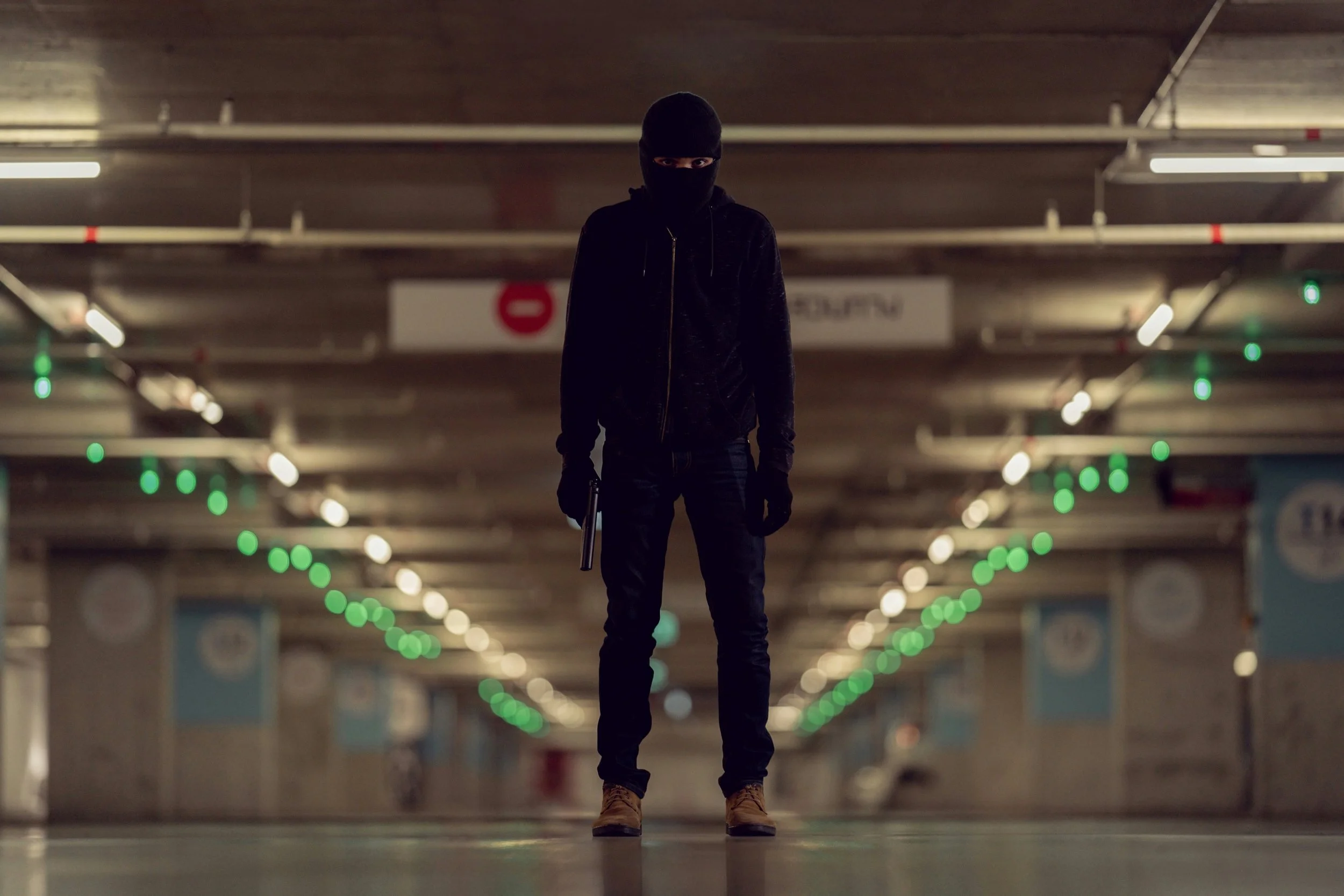
(Picture by Getty Images)
The many faces of insecurity
To start with, the gun-and-hunger framing obscures the full range of threats that most people actually face. If by security we mean more than surviving a single confrontation — if we mean the conditions that allow people to live without chronic fear, coercion or preventable harm — then the threat landscape looks very different. Physical violence between strangers — the threat that prepper culture is primarily oriented toward — is statistically among the less common forms of violence that most people in most places actually face. Psychological violence, structural violence, state violence, domestic violence, economic coercion, social exclusion — these are the forms of insecurity that affect the most people, most of the time, in most contexts. A bunker and a firearms licence are largely irrelevant to all of them.
The Northern Rivers floods of 2022 offer a closer-to-home illustration of this. The violence experienced during and after the disaster was not only physical — it was multiple and layered. The floods created and exacerbated serious issues including family violence, housing insecurity, insurance disputes and economic coercion, alongside more visible forms of physical threat including looting and assault. Reports of domestic violence and alcohol and drug abuse increased significantly in the aftermath, while families were living in overcrowded conditions in tents and caravans, parents were physically exhausted, and children showed PTSD-type symptoms. The psychological impact emerged as a dominant theme, with rising rates of mental health issues, PTSD and suicidal thoughts — compounded by a slow recovery process, housing insecurity and financial stress. State violence was present too, not in the form of direct aggression but in the form of structural and bureaucratic constraint — government agencies unable to respond at the scale required, and processes that were complex to navigate and added burden to people already at the edge of their capacity. Against this full range of threats, what households and communities actually did was not arm themselves or fortify their properties. They organised watch networks, shared information, distributed food, checked on vulnerable neighbours, cooked meals for strangers, established informal support systems that the formal ones couldn't provide, and held each other through sustained psychological distress over months and years. The security that mattered in that context — the security that reduced harm, maintained dignity and enabled recovery — was built from relationships, not from weapons.
This is important because if you build your security model around the wrong threat, you invest in the wrong responses. A household that has fortified itself against armed strangers while ignoring the psychological violence in its own relationships, the structural violence of its community's economic conditions, or the slow accumulating violence of climate disruption, has built a model that addresses a rare threat while leaving common ones entirely unaddressed.
Security literacy begins with an honest assessment of what you are actually at risk from — not what you fear most vividly, and not what the most compelling survival narrative happens to feature.
But the gun-and-hunger model is incomplete in a second and deeper way — one that goes to the heart of how security is actually produced and who produces it.
You partly create the conditions of your own insecurity
The orientation you bring to potential threat partly shapes the threat landscape you actually inhabit. Not entirely. Not in all circumstances. But significantly, and consistently enough that the orientation is worth looking in more depth.
The prepper household that visibly signals stockpiled resources and defensive capability in a community where most households are struggling may be advertising resources worth taking rather than deterring those who might take them. The community that invests in relationships, trust and mutual aid is creating different conditions — conditions that tend, on the evidence, to produce better outcomes under sustained pressure, including lower rates of interpersonal violence and faster recovery from external shocks.
The research on social capital and disaster resilience, on post-conflict recovery, on the relationship between inequality and violence, and on community responses to crisis is consistent across multiple fields and scales. Collaborative societies fare better than adversarial ones — not because they are naive about threat, but because they have invested in the conditions that make threat less likely to emerge and more likely to be contained when it does.
Security is a collective good. In most circumstances, it is produced by being shared, not hoarded.
We don’t see the world as it is, we see it as we are
During my PhD research at the London School of Economics, I spent time studying how international aid organisations approached security in active conflict environments. One of my two case studies was Afghanistan. And one of the observations that had the most impact on me was something I encountered on a single street in Kabul, where three different international aid organisations were operating within a few hundred metres of each other, in the same threat environment, with three entirely different security postures.
The first had high walls, barbed wire, armed guards and vehicle inspection mirrors at the entrance. It was unmistakably fortified — designed to signal strength and deter attack through visible defensive capability.
The second had an open gate. Staff moved freely in the community. The organisation maintained active relationships with a wide range of local actors, including Taliban contacts and local warlords, and had sophisticated intelligence about the local security environment. Anyone could walk in relatively easily.
The third was barely visible. There was nothing about its presence on that street that clearly identified it as an international organisation at all. It had chosen invisibility as its primary security strategy.
All three experienced security incidents. The fortified organisation was attacked by the Taliban — a targeted, deliberate attack that the organisation understood as confirmation that its hardened posture was justified and necessary, and that further hardening was required. The open-gate organisation had staff kidnapped, but was able to secure their release without paying ransom, through the relationships and contacts it had spent years building. The low-profile organisation experienced mostly random, opportunistic incidents rather than targeted ones — consistent with the logic of its approach, and confirming to those within it that invisibility was the right strategy.
Each organisation looked at its experience and saw evidence that it had chosen the correct security posture.
The co-constitution of identity and security
However, to go deeper, what I observed on that street was not just three organisations making different rational calculations about the same threat environment and arriving at different conclusions, but three organisations whose identities — their sense of who they were, what they stood for, how they understood their relationship to the conflict around them — was then shaped in turn by the security incidents they experienced, which was reinforcing and deepening their worldviews and identities.
The fortified organisation understood itself as a potential target in a hostile environment. That self-understanding produced a hardened posture. The hardened posture signalled military-style presence, which in Taliban logic made it a legitimate target worth attacking. The attack confirmed the threat assessment. The identity as a target was reinforced. Further hardening followed.
The open-gate organisation understood itself as a community actor whose safety depended on acceptance — on being genuinely perceived as serving the population rather than as a foreign presence to be exploited or expelled. That self-understanding produced a relational posture. The relational posture produced intelligence networks and contacts. The contacts produced the capacity to resolve kidnappings of their staff through negotiation rather than payment or force. The identity as a community actor was reinforced.
The low-profile organisation understood itself as a neutral presence whose safety depended on invisibility. That self-understanding produced a minimal footprint. The minimal footprint made it a less attractive target. The mostly random rather than targeted incidents confirmed the approach. The identity as an organisation who needed to keep a neutral approach was reinforced.
This is what my PhD thesis, published in 2011 and accessible here, argued: that identity and security are not separate domains where one precedes and determines the other. They are co-constituted — each shaping and reshaping the other in a continuous feedback loop. In other words, we see the world as we are, and in turn, this perception of the world shapes the perception of who we are. The threats we perceive, the measures we deploy in response to them, and, in turn, the experiences those measures produce gradually shape who we say we are.
This dynamic is not unique to international aid organisations in conflict zones. It operates at every scale — in households preparing for disruption, in communities deciding what kind of relationships to invest in, and in the broader cultural conversation about what genuine safety actually requires. The research on how violence actually operates confirms this in two directions. People who understand themselves primarily as potential victims tend to develop a fearful mindset that reads neutral situations as threatening — and that internal state expresses itself outwardly in ways they are often unaware of: a hesitant gait, averted eyes, closed body language, a diminished sense of presence. The research on predatory target selection is consistent on this point: offenders assess non-verbal cues within seconds, and the signals of fearfulness and diminished situational awareness that a victim mindset produces are precisely the signals that attract predatory attention. The orientation meant to protect becomes, in practice, a marker of vulnerability.
And people who signal dominance through visible weapons, tactical gear and aggressive identity markers tend to invite challenge responses from others operating in the same status economy of violence, escalating threat rather than deterring it. Both postures, for different reasons, can produce the insecurity they were designed to prevent.
Understanding it changes what you think security requires. If identity shapes the threat landscape you inhabit, then the most important security investment is not in weapons or fortifications — it is in the identity you bring to the situation, and the relational conditions that identity produces.
How security actually works
In genuinely dangerous environments — the kind I worked in, across conflict zones in Central Africa, Afghanistan, Iraq, Haiti and elsewhere — security is built through a sequence of capacities that run from intelligence through prevention through deterrence through defence, with weapons appearing as one (possible but not always necessary) option within the last of these rather than the primary response to threat.
But before intelligence, prevention, deterrence and defence, there is something more fundamental: the identity you bring to the situation. How you understand and present yourself — who you are, what you stand for, what you are trying to achieve — shapes how others perceive you, how you relate to them, and what options are available to you as a result. An organisation that sees itself as part of a community will naturally build relationships with that community. One that sees itself as a target in a hostile environment will naturally build walls. Neither is making a purely tactical calculation. They are acting out of who they believe themselves to be. And that, more than any specific security measure, is what determines the threat landscape they end up inhabiting.
So, self-awareness comes first. In practice, this means asking honest questions before reaching for tactical responses. How do I understand my relationship to the people and environment around me — as a participant or as a potential target? How am I likely to be perceived, and does that perception serve or undermine my safety? What signals am I sending through how I present myself, how I communicate, and how I engage with others? Am I investing in the relationships and trust that would give me options if things deteriorated, or am I withdrawing from them in ways that leave me more isolated and more exposed? These are not comfortable questions, and they do not have simple answers. But they are more fundamental to genuine security because they determine the conditions in which everything else unfolds.
Intelligence comes second. Understanding the environment, the actors, the power dynamics, the early signals of deteriorating conditions. Having relationships that produce information. Knowing who controls what territory and what they want, and being known by them in return. This is the foundation; not because it eliminates threat, but because it makes threat visible early enough to respond before it becomes acute.
Prevention comes third. Creating the relational and structural conditions that make violence less likely to emerge. Building trust, maintaining agreements, being known as an organisation or person who delivers on commitments, ensuring that the people around you have reasons to want you safe. The open-gate organisation's contacts I mentioned earlier didn't just help it resolve kidnappings. They reduced the likelihood of kidnappings occurring in the first place, because harming that organisation meant harming relationships that mattered to people who had leverage over those who might cause harm.
Deterrence comes fourth. Making the cost of attacking you higher than the benefit — through visibility, relationships, information networks and the kind of embeddedness in a community that means an attack on you is also an attack on people others care about. This does not require weapons. It requires presence, trust and the kind of reputation that makes targeting you more trouble than it is worth.
Defence comes last. And even here, weapons are one option among several — and not necessarily the most effective one. Protective accompaniment, communication systems, evacuation protocols, community networks that notice when something is wrong, early warning systems — these are all forms of defence that carry fewer specific risks than arming.
Weapons introduce their own dynamics that are worth exploring. Accidents are more common than most people acknowledge; in many contexts, the evidence suggests that a weapon kept for protection is more likely to harm someone within the household than the imagined intruder. Escalation is a real and underappreciated risk: introducing a weapon into a confrontation changes its logic, because the other party now has reason to escalate their own response, and the endpoint of that dynamic is rarely the one the original weapon-holder imagined. The attraction of better-armed adversaries is a related problem — a visibly armed household or organisation signals that it has resources worth taking and the capacity to resist, which in certain environments draws exactly the kind of attention it was designed to deter. And the false sense of security that weapons can produce is perhaps the most insidious risk of all: the household or organisation that has armed itself tends to feel that the security problem has been addressed, which reduces the urgency of investing in the intelligence, prevention and deterrence work that would actually make it safer. The weapon becomes a substitute for the harder and more important work rather than a complement to it.
This is not an argument against all defensive measures. It is an argument for understanding where defence sits in the sequence — last, not first — and for being clear-eyed about what weapons do and don't provide in that context.
The identity that underlies all of these layers is not incidental to them. It determines which layers you invest in, how you deploy them, and what threat experiences you are likely to have as a result.
What community security actually looks like when everything fails
The objection that community resilience cannot protect against real violence — that when law and order collapse, only force matters — is worth considering. I have worked and lived in contexts where law and order had genuinely collapsed: Iraq after the fall of Saddam, the Ituri region of eastern Congo during active civil war, Haiti in the weeks after the 2010 earthquake. These were not theoretical scenarios. They were environments where formal protection systems had failed entirely and people were navigating genuine physical danger with whatever resources they had.
What I observed in those contexts was not the war-of-all-against-all that the gun-and-bunker model predicts. It was something considerably more complex and considerably more hopeful.
Neighbourhoods organised informal watch systems — not armed militias, but networks of people who knew each other, trusted each other and shared information about what was happening and where. When a threat was identified, the response was collective and coordinated rather than individual and defensive. Informal agreements emerged between groups that had every reason to be in conflict, because the people involved understood that sustained conflict was more costly than negotiated coexistence. Social norms held in ways that formal enforcement could not have produced, because they were sustained by relationships and reputation rather than by the threat of legal sanction.
Individuals who were exhausted by violence took it upon themselves to create new ways of living together — not because they were naive about the dangers but because they had seen, at close range, what the alternative produced. These were not soft or idealistic people. They were people who had survived serious violence and concluded from that experience that the relational path offered better odds than the adversarial one.
When threats involved weapons, the responses I observed were rarely armed confrontation. They were evacuation, temporary relocation, negotiation and the mobilisation of relationships that could influence the people doing the threatening. These responses were not always successful. There were situations where the violence was so organised and so extreme that no amount of social capital could contain it. I am not claiming otherwise.
But my comparison is not between community-based security and illusory perfect safety. It is between community-based security and the fortified individual alternative. And on that comparison, the evidence from those contexts was consistent: the people and organisations most embedded in relationships and community networks had more options available to them under extreme conditions, not fewer. They had more warning, more assistance, more capacity to navigate and more routes out. The person who had spent years building trust and reciprocity had something to draw on when things became genuinely dangerous. The person who had spent those years fortifying their household and treating neighbours as potential threats had, in many cases, less.
Security in those environments was not the absence of threat. It was the maintenance of enough relational infrastructure to navigate threat when it arrived — which, in a context of genuine collapse, it reliably did.
Real security goes beyond protection from physical violence
There is a broader framework worth mentioning here, because it changes how the whole question of security is understood. The concept of human security — developed by the United Nations in the 1990s as a deliberate challenge to the military-focused model — defines security not as the protection of states or households against physical attack, but as the freedom of people from fear and from want across seven interconnected dimensions: economic, food, health, environmental, personal, community and political.
On that understanding, security is not a single condition you achieve by arming yourself or stockpiling supplies. It is a quality of life produced by the functioning of multiple overlapping systems — social, economic, environmental and political — that support human dignity and reduce vulnerability across its many forms.
Community resilience, at its best, builds capacity across most of those dimensions simultaneously. The prepper model, focused overwhelmingly on personal security against physical threat, addresses one dimension of one category while leaving the others largely untouched.
Genuine security — the kind that actually reduces vulnerability in the full range of ways that matter — is built relationally, systemically and collectively. It always has been.