Prepper vs community builder: what actually works when things fall apart
In brief: My household grows food, has backup power, stores water and teaches bushcraft to our kids. By most practical measures, we look a lot like preppers, but really, we are not. The difference is not what we do. It is how we do it and who we see ourselves doing it with. This piece draws on disaster research and frontline experience to examine what preppers and community resilience advocates share, where they diverge — and what the evidence consistently shows about what actually works when things fall apart.
The first time someone described me as looking like a prepper, I wasn't sure whether to be offended or amused.
We have generators, portable power stations, solar capacity and batteries. Satellite communicators. Water storage and filtration. Emergency packs. Cash reserves. We teach our children bushcraft skills and we fish as a family. My wife has completed permaculture training, delivered food preservation and fermentation workshops, and built connections with local food growers that most people in our street don't have.
By most practical measures, the label fits.
But spend five minutes in the prepper world — the tactical gear, the zombie apocalypse imagery, the heavily armed men preparing to defend their stockpiles against their neighbours — and the resemblance falls apart entirely. What we are doing looks similar on a checklist. The values, the orientation and the evidence about what actually works under pressure are almost opposite.
The difference is not what we grow, store or know. It is how we do it and who we see ourselves doing it with.
We are not preparing to withdraw from the systems around us or to protect our household against the people around us. We are trying to build capability that connects outward: to neighbours, community groups, local food networks, informal care systems and the relationships that research after disasters repeatedly identifies as critical infrastructure.
That distinction — between preparing to survive apart from your community and preparing to contribute to its survival — turns out to be hugely important. Not just as a values preference but also as a practical question about what actually works. And the research is clearer on this than most people in either camp realise.
At this stage, I’d like to clarify how I use the word “prepper” in this piece. I am not using it here to describe anyone who stores food, water, batteries or medication. Sensible household preparedness is not the problem. It is essential. I am using “prepper” to describe a particular orientation to preparedness: one that imagines safety as separation, scarcity as inevitable, institutions as mostly doomed, and other people primarily as threats.
That orientation is not the only form of prepping. Many people who identify as preppers are ordinary, practical, generous people responding to reasonable concerns. Some are deeply community-minded. Some are much more sophisticated than the caricature allows. But the individualist, survivalist and often militarised version of prepping remains culturally powerful, and it offers a useful contrast with community resilience.
The same water tank, battery, garden, radio or food store can express either worldview. The question is not whether you are prepared. The question is whether your preparedness increases only your private margin of safety, or whether it also increases the adaptive capacity of the people around you.
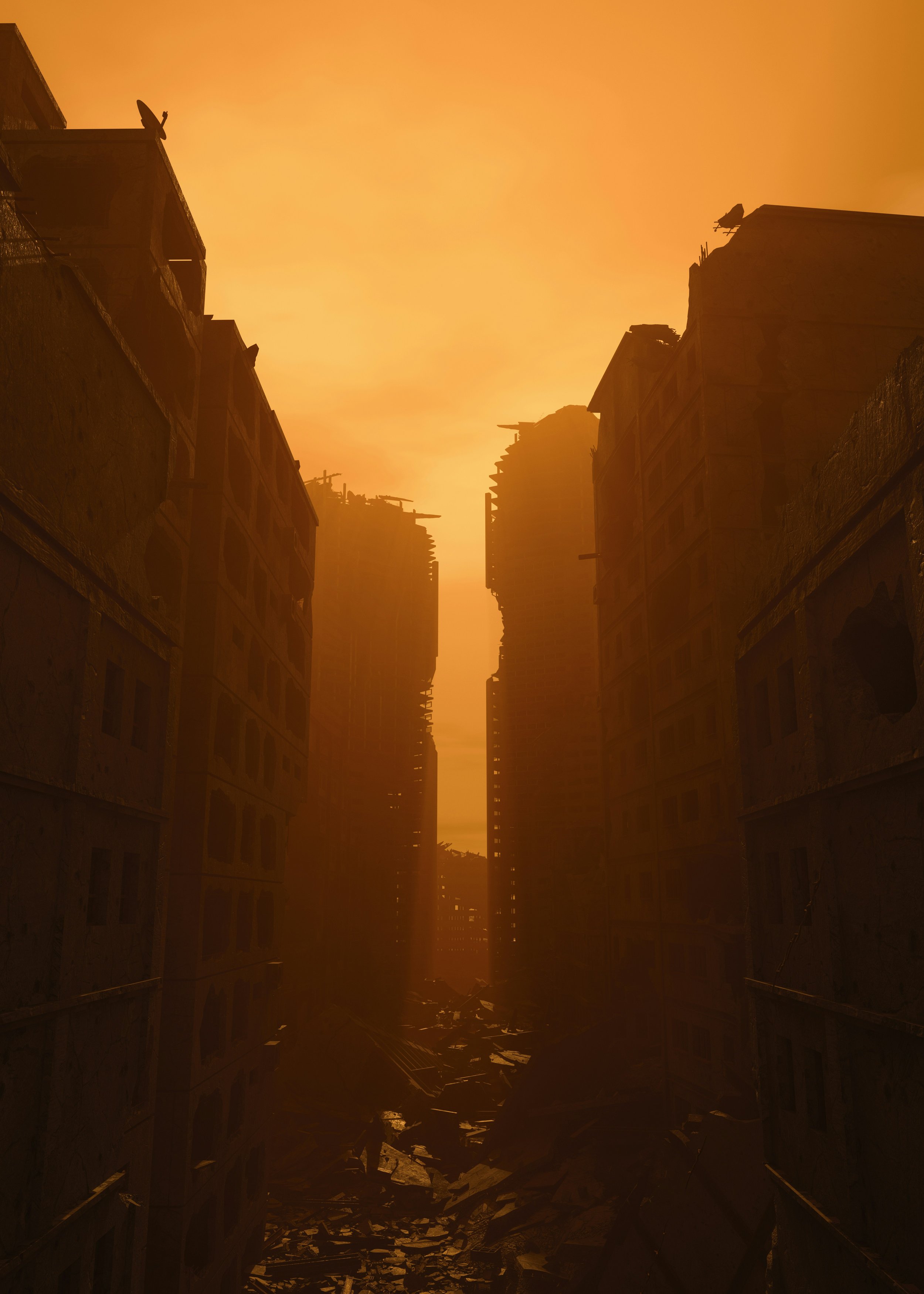
(Picture by A Chosen Soul)
A brief history of two movements
The survivalist movement emerged in the United States in the 1970s, shaped by Cold War anxiety, economic instability and a deep distrust of government and institutional systems. Through the 1980s and 1990s it accumulated considerable political baggage — associations with militia movements, racial anxiety and anti-government extremism that culminated in Waco, Ruby Ridge and the Oklahoma City bombing. In the 2000s, many people who shared the practical orientation of survivalism but not its political extremism began using the term "preppers" — a rebranding that reflected a genuine broadening of the movement toward more mainstream concerns: natural hazards, economic disruption, pandemic preparedness, supply chain fragility and household self-reliance. Today, “prepping” and “survivalism” are often used interchangeably, though they are not always the same thing.
Community resilience has different roots. It draws from Indigenous and traditional community practices, mutual aid traditions, cooperative organising, working-class survival strategies, disaster management research, and the academic literature on social capital and disaster outcomes. It is also deeply place-based. It asks not only what a household owns, but how people relate to each other, to local institutions, to land, water, food, energy, Country and the ecological systems that make life possible.
Both movements have grown significantly since COVID. Both are responding to the same underlying reality: that the systems most people depend on are more fragile than they appear, and that this fragility is becoming more consequential as disruptions compound.
What they propose to do about it is however quite different.
What they share
The overlap between prepper and community resilience approaches is more substantial than either side tends to acknowledge, and identifying it clearly is helpful before examining where they diverge.
Both take systemic fragility seriously at a time when mainstream culture still tends to dismiss it. Both invest in practical skills that many urban and suburban households have largely lost: food growing, food preservation, first aid, water management, energy independence, communication redundancy, repair skills, navigation and basic self-reliance.
Both question the wisdom of total dependence on supply chains, centralised institutions and services that have repeatedly demonstrated their vulnerability under pressure.
Both, in their different ways, are trying to answer the same question: what do you do when the systems you normally rely on stop working?
This overlap matters because household preparedness is genuinely useful. A household that grows some food, stores reserves, has backup power, keeps essential medication accessible, understands local hazards and knows how to manage without reliable supply chains is less exposed than one that has none of those things.
The problem is not the toolkit. It is the orientation of the toolkit.
Preparedness can become withdrawal, or it can become contribution. It can produce a fortified household, or it can produce a capable household embedded in a network of reciprocal relationships. It can deepen suspicion, or it can increase trust. It can turn neighbours into imagined threats, or it can turn neighbours into the first layer of collective safety.
This distinction shapes everything that follows.
Where they diverge
Prepping and community resilience diverge in at least six ways: motivation, social orientation, culture, security, approach to risk and food security. These differences are not merely philosophical. They affect what actually happens under pressure.
1. Motivation: fear or contribution
The more individualist versions of prepping tend to be driven by fear: fear of collapse, scarcity, social disorder, institutional failure and other people. This is not an irrational response to genuine systemic fragility. Fear is a rational signal. It tells us that something matters and that something may be at risk.
But fear-driven preparation tends to produce defensive solutions: the fortified household, the long-term stockpile, the bunker, the armed perimeter, the withdrawal from community networks in anticipation of their failure.
Community resilience begins from concern too. It does not deny risk. But its motivation is more relational. It is grounded in a positive vision of what people can build and do together under pressure. Its ethos is less defensive than generative. The question is not only “how do I protect my household?” It is also “what capacity can my household contribute to the wider system around us?”
That shift changes the meaning of preparedness.
A generator is not just backup power for your own fridge. It can keep a neighbour’s medication cold. A satellite communicator is not just a device for your own safety. It can help relay information when phones fail. A garden is not just household food security. It can become a place of exchange, learning and relationship. A stored reserve is not only a private buffer. It can buy time for others.
2. Social orientation: separation or social infrastructure
The more survivalist approach anticipates the collapse of existing systems and builds parallel infrastructure in anticipation, including, in some cases, preparing to defend that infrastructure against others.
Community resilience invests in the social order that makes collective response possible. It assumes that people do better when they have relationships, trust, communication channels, local knowledge, practical skills and ways to coordinate before the emergency arrives.
This is where social capital matters, but the term needs to be used carefully. Some prepper communities may have strong bonding social capital: tight relationships within a defined group. That can be powerful. But community resilience also depends on bridging social capital — relationships across groups — and linking social capital — relationships between communities and institutions.
Bonding capital helps “people like us” look after each other. Bridging capital helps different neighbourhoods, cultures, classes, age groups and organisations cooperate. Linking capital helps communities influence, coordinate with and hold accountable councils, emergency services, health systems and governments.
Resilience requires all three.
A household or group that withdraws from wider community networks in preparation for their failure may become more capable in a narrow sense, but it can also contribute to the very failure it fears. It removes trust, knowledge, resources and practical capacity from the shared pool.
What sustains social infrastructure under pressure is not only practical connection — food networks, mutual aid arrangements, radio networks, shared equipment, local transport, community hubs — but emotional capacity.
Fear, grief, exhaustion and conflict intensify under sustained disruption. Communities that have not developed the emotional intelligence to navigate those states can fracture precisely when cohesion matters most. The ability to stay present with someone who is struggling, manage your own fear without projecting it onto others, repair relationships under pressure, de-escalate conflict and keep working with people you find difficult is not a soft extra but a core resilience infrastructure.
The individualist prepper model, oriented towards toughness and external threat management, has little to offer here. Community resilience, at its best, treats emotional capacity as something to be developed deliberately, alongside food growing, water storage, first aid and communication redundancy.
3. Culture: performance or ordinary capability
The prepper aesthetic is often highly visible: military-style clothing, tactical equipment, weapons, threat displays, rugged masculinity and apocalyptic imagery drawn from zombie films and collapse scenarios. It signals individual formidability in a world imagined as adversarial.
This aesthetic is not universal among preppers, and it should not be mistaken for the whole movement. But it is culturally influential. It shapes how preparedness is marketed, imagined and performed.
Community resilience usually looks very different. In many of the community-led resilience spaces I have worked with, including the Northern Rivers, women have been central to the work. The culture is often grounded less in threat and more in care, coordination, practical usefulness, local knowledge and the ordinary labour of keeping people connected.
This is not because men are incapable of care or women are naturally resilient. It is because different cultures of preparedness cultivate different forms of behaviour, leadership and legitimacy.
The people building community food gardens, running fermentation workshops, organising neighbourhood networks, checking on older residents, mapping local food systems or coordinating recovery hubs are usually not dressed for a cinematic apocalypse. They are ordinarily dressed, locally embedded and motivated by what they want to build together, not only by what they fear losing alone.
This aesthetic difference is not superficial. It reflects a deeper cultural difference between a model that treats other people as potential threats and a model that treats other people as the primary resource when things go wrong.
4. Security: looking dangerous or being safer
There is also a practical point here from my experience working in war zones. In environments where the threat of violence is real and immediate, safety sits at the opposite end of what the prepper aesthetic implies: attract as little attention as possible. Wear civilian clothes. Do not display weapons. Do not signal resources worth taking. Do not look like a threat. Keep a low profile.
The person who looks most formidable is often the person most at risk. A visibly armed, militarily equipped posture may feel empowering in fantasy scenarios, but in many real settings it can make you more visible, more threatening and more likely to be targeted.
This does not mean security is irrelevant. It means security has to be understood more intelligently than “look dangerous”.
Community resilience does not pretend that risk disappears. Theft, violence, looting, aggression, domestic violence, opportunism and fear all matter in disaster settings. But safety is not built only through isolation and force. It is also built through visibility, trust, de-escalation, shared norms, local intelligence, distributed resources, communication channels, relationships with formal services and the capacity to notice when people are becoming unsafe.
Security is real. The question is whether it is built through suspicion and separation, or through collective situational awareness and mutual responsibility.
5. Risk: cinematic collapse or local compounding disruption
Both preppers and community resilience advocates engage seriously with risk. The prepper community includes sophisticated thinkers who analyse cascading failures, compounding pressures and systemic vulnerabilities with genuine rigour.
The difference is not always in the quality of the analysis. It is often in what the analysis is anchored to.
The survivalist imagination tends to anchor risk assessment to scenarios of civilisational breakdown: permanent grid failure, governmental collapse, the dissolution of social order, mass violence and long-term isolation. These scenarios are not impossible, but they sit at the extreme end of the probability distribution. Preparations optimised for them tend to emphasise long-term individual self-sufficiency and private defence.
Community resilience anchors risk assessment to the disruptions that arrive with increasing regularity: floods, fires, heatwaves, prolonged supply chain interruptions, climate variability, infrastructure failure, insurance retreat, cost-of-living pressure, health system strain and social fragmentation. These are less cinematic, but they are already here.
Preparing for them requires a different set of capabilities: understanding the specific hazard profile of your place and specific vulnerabilities of your community, tracking how climate trends are shifting that profile, using forecasts and early warnings to act before disruption rather than only in response to it, and thinking in systems rather than isolated scenarios.
A bushfire does not just destroy homes. It disrupts roads, power, telecommunications, supply chains, schools, health services, local economies, mental health and social cohesion. A flood is not only water through houses. It is displacement, mould, insurance conflict, trauma, lost income, housing stress, damaged trust, exhausted volunteers and years of recovery work.
The question is not whether disruptions compound. Most serious people in both movements understand that they do. The question is which disruptions you are actually preparing for, and whether your preparation matches the lived reality of those risks.
6. Food security: storage or access
The difference in orientation produces a direct difference in how food security is understood. The prepper model tends to treat food security primarily as storage: accumulating enough reserves to survive in isolation for an extended period. The community resilience model treats food security as access: the ability to reach food through a diversity of sources when some of those sources are disrupted.
That includes storage. It also includes growing food, knowing local producers, understanding seasonal availability, preserving food, participating in food swaps, supporting local distribution systems, building relationships with farmers, developing informal exchange networks and protecting the social conditions under which people share.
The difference matters enormously under sustained disruption. Stored food runs out. Relationships and local food systems can renew themselves, if they are maintained. They require land, water, labour, trust, governance, local knowledge, time and care.
A household with twelve months of food but no relationships may be safer for a while. A community with gardens, growers, shared kitchens, distribution networks, local knowledge and trust has a different kind of resilience. It can adapt.
Community resilience is not automatically good
There is a risk in any argument for community resilience: it can make “community” sound inherently benevolent, inclusive and functional. It is not.
Communities can exclude. They can reproduce racism, sexism, homophobia, ableism, class privilege and informal hierarchies. They can ignore renters, migrants, older people, young people, people with disability, people with different sexual orientation, people without cars, people without English, people without money, people without spare time and people who are socially isolated.
They can be captured by local powerholders. They can burn out the same small group of volunteers again and again. They can rely on unpaid women’s labour while celebrating it as community spirit. They can fracture through conflict, gossip, trauma, ego, exhaustion and lack of accountability.
That is why community resilience cannot mean vague neighbourliness or romantic localism. It has to mean deliberate work: governance, inclusion, role clarity, conflict capacity, redundancy, accessibility, power-sharing, care for volunteers, relationships with institutions and attention to the people most likely to be missed.
A resilience agenda that only works for homeowners with sheds, gardens, solar batteries and spare cash is not resilience. The test is whether it improves the options available to renters, older people, people with disability, low-income households, isolated residents and people already living under chronic stress.
Community resilience also cannot become an excuse for government retreat. Communities are often first to act because they are closest to the impact. They know the roads, the creeks, the vulnerable residents, the informal shortcuts and the actual conditions on the ground. But community-led action does not absolve governments of responsibility for warnings, infrastructure, emergency services, housing, health systems, communications, preparedness and recovery funding, planning decisions and climate adaptation.
Community resilience is not a substitute for competent government. It is what allows people to act before, during and after institutional response, but it should strengthen public systems, not provide political cover for abandoning them.
The task is not to choose between community and institutions. It is to build communities capable of acting, and institutions capable of listening, supporting, resourcing and being held accountable.
What the evidence says about what actually works
The evidence consistently favours the community resilience approach under the conditions that matter most — sustained, compounding disruption that exceeds individual household capacity.
In Chicago’s 1995 heatwave, Eric Klinenberg’s work showed that mortality was shaped not only by temperature, poverty or age, but by social isolation, neighbourhood conditions, institutional failure and the presence or absence of everyday social infrastructure. People died alone in places where social connection had already been eroded. Neighbourhoods with active street life, local organisations and stronger social ties fared better than places where people were isolated behind closed doors.
After Superstorm Sandy struck the northeastern United States in 2012, researchers studying recovery patterns found that communities with stronger social resources recovered significantly faster than adjacent communities with weaker ones, regardless of socioeconomic status. Social capital — the trust, reciprocity and mutual aid embedded in community relationships — can make poorer communities more resilient and its absence can make wealthier communities less so. Friends and neighbours are the first line of defence in a disaster, and communities with a reservoir of social resources have better outcomes than those without one.
The Northern Rivers floods of 2022 have become one of the most important Australian examples of community-led disaster response. The grassroots response showed the power of community-led action when formal systems were overwhelmed by the scale of the disaster. Recovery hubs appeared in community halls, neighbourhood centres, private homes and improvised local spaces, often ahead of formal mechanisms. When official flood monitoring systems failed, local residents recorded and communicated the emerging crisis, then helped build community-owned flood intelligence systems designed to function when official ones did not.
What is also striking is who led much of that response. Research authored by UCRH researchers Dr Rebecca McNaught, Dr Jo Longman and Emma Pittaway, alongside Loriana Bethune from Gender and Disaster Australia and Dominica Meade from the University of Melbourne, makes visible the significant and enduring contribution women made to health, wellbeing and recovery across the Northern Rivers, often through collaborative, local and relational forms of leadership.
Four years after the floods, grassroots resilience groups across the region are still working to build capacity, share resources, reduce burnout, advocate for communities and connect local groups into a broader regional movement.
This is not heroism performed by people with military training or tactical equipment. It is care, coordination, distributed leadership, local knowledge and relational intelligence. Individual preparedness still mattered. Boats, radios, generators, fuel, food, tools, first aid skills and practical competence all mattered. But when disruption lasted longer than supplies, when needs exceeded individual household capacity, when recovery required coordination, what mattered most was social infrastructure.
A systematic review of research on social capital and disaster resilience found that social capital supports resilience across disaster phases through social learning, collective action, preparedness, information sharing and civic responsibility. Put simply, communities do better when people know each other, trust each other, learn together, act together and feel responsible for more than their own household.
Daniel Aldrich’s work on post-disaster recovery makes the same point from a comparative perspective. Looking across disasters including the 1923 Tokyo earthquake, the 1995 Kobe earthquake, the 2004 Indian Ocean tsunami and Hurricane Katrina, Aldrich argues that recovery outcomes cannot be explained only by the scale of physical damage, levels of wealth or the amount of external aid. What often distinguishes places that recover from places that stagnate is the depth of their social capital: the trust, networks and relationships that allow people to share information, mobilise resources, coordinate action and keep people from leaving the area altogether.
The most resilient household is not necessarily the most heavily stocked one. It is the household most capable of sustaining itself while remaining embedded in a community that can adapt.
What genuine resilience literacy looks like
Genuine resilience literacy is not a list of things to stockpile. It is a way of thinking and acting that integrates several capacities that the prepper model largely leaves out and that the community resilience approach, at its best, develops deliberately.
It begins with risk literacy — the honest, evidence-based assessment of what hazards are actually relevant to where you live, how likely they are, how they are changing as the climate shifts, and how they interact with each other under compounding conditions. This means engaging with forecasting and early warning systems. It means understanding what seasonal outlooks, river gauges, fire danger ratings, heat warnings, climate projections and local knowledge are telling you, and acting before disruption rather than only after it arrives.
It requires systems thinking — the capacity to see your household, your community and your region as interconnected systems whose vulnerabilities and strengths are not independent of each other. The question is never just “what happens if the power goes out?” It is “what happens if the power goes out during a heatwave, while the roads are closed, while telecommunications are unreliable, while the local food supply is already under pressure, while older people are isolated, while the health system is strained, and while people are already financially stressed?”
It requires deliberate investment in social capital — the relationships, networks and trust that the research consistently identifies as the most important determinant of how communities perform under pressure. Social capital is not built during a crisis. It is built in the years before one arrives, through the ordinary acts of showing up: the community garden, the neighbourhood network, the local food swap, the farmers market, the mutual aid group. These are not peripheral activities for people with spare time. They are the infrastructure of resilience, and they are built or neglected in ordinary times.
Alongside social capital sits emotional intelligence — the capacity to stay present with people who are struggling, to manage your own fear without projecting it onto others, to navigate conflict and grief under pressure rather than being undone by them. Sustained disruption does not only test practical capability. It tests the quality of human relationships and the emotional resources people bring to them. Communities that have developed emotional literacy — where people know how to ask for help, how to offer it without diminishing others, and how to maintain trust when conditions are hard — demonstrate measurably better outcomes under crisis conditions than those that haven't. This is rarely discussed in preparedness circles but is consistently supported by the evidence.
And it requires something that neither the prepper nor the conventional emergency management conversation talks about enough: an entrepreneurial orientation toward disruption. Disruption is not only a threat to be managed. It is also a condition that creates genuine opportunities — for new ways of producing and distributing food, for local energy solutions, for organising care, sharing tools, building local services, using technology, strengthening neighbourhoods and creating livelihoods that make communities less dependent on fragile centralised systems. The communities and organisations that navigate disruption best are not only those that have prepared to absorb it but those that have developed the capacity to adapt creatively within it — to find new solutions, build new models and create value from conditions that others experience only as loss.
What this means in practice
My household grows food, has backup power, stores water, maintains communication redundancy and teaches practical skills to our children. These things matter and I would not give them up.
But they are not the end of the story. They are the foundation — the oxygen mask you put on yourself before helping the person next to you. You cannot contribute meaningfully to your community's resilience from a position of depletion. A household that is genuinely prepared, is a household that has something to offer when things get hard. That is why individual preparedness matters. Not as a substitute for community investment but as its precondition.
So, build the skills. Grow some food. Store some reserves. Develop backup power and communication capacity. Understand the hazards relevant to where you live and track how they are changing. Develop the practical knowledge that reduces your household's dependence on systems that can fail.
And then — more importantly — turn outward. At the household level, prepare enough that you are less likely to become immediately dependent on others during a disruption. At the street level, know your neighbours. Learn who may need help, who has skills, who has equipment, who has mobility issues, who lives alone, who has medical needs and who is likely to notice trouble early. At the community level, support food networks, community gardens, repair groups, neighbourhood centres, local producers, resilience groups, recovery hubs, radio networks, preparedness workshops and informal systems of care. At the regional level, connect grassroots work with councils, emergency services, health systems, researchers, funders and advocacy networks, so that local intelligence can shape formal systems rather than merely compensate for their failures.
Understand food security not only as what you have stored, but as what your community can access through growing, preserving, exchange, local production, distribution and trust. Understand safety not only as what you can defend, but as what your community can notice, prevent, de-escalate and coordinate. Understand preparedness not only as what protects you, but as what makes you useful.
Not because it feels virtuous, but because the logic is simple: I can only be safe if my neighbours are safe. They can only be safe if their neighbours are safe. Resilience is not something you achieve alone. It is something communities build together — or don't build at all.