When the mind goes blank - How to make good decisions under pressure
In brief: Most leaders assume they will think clearly in a crisis. Most discover, at some point, that they don't — and that discovery tends to arrive at the worst possible moment. This piece draws on cognitive science, crisis research and decades of frontline experience to explain what actually happens when pressure arrives, how to know your own response pattern, and what to do about it when it matters.
There is something almost no one in the field of crisis management says out loud.
Most crisis practitioners — including me — have built professional identities around being the person who knows what to do when things go wrong. That identity is not false, but it is incomplete. Because underneath the training, the experience, and the professional composure, there are moments where the mind, instead of rising to meet the situation, goes quiet. The clarity of action that should be there simply isn't. My mind is not panicked, not racing. Just blank.
Sometimes a crisis happens and it requires an immediate response, but I don't know what to do.
I freeze.
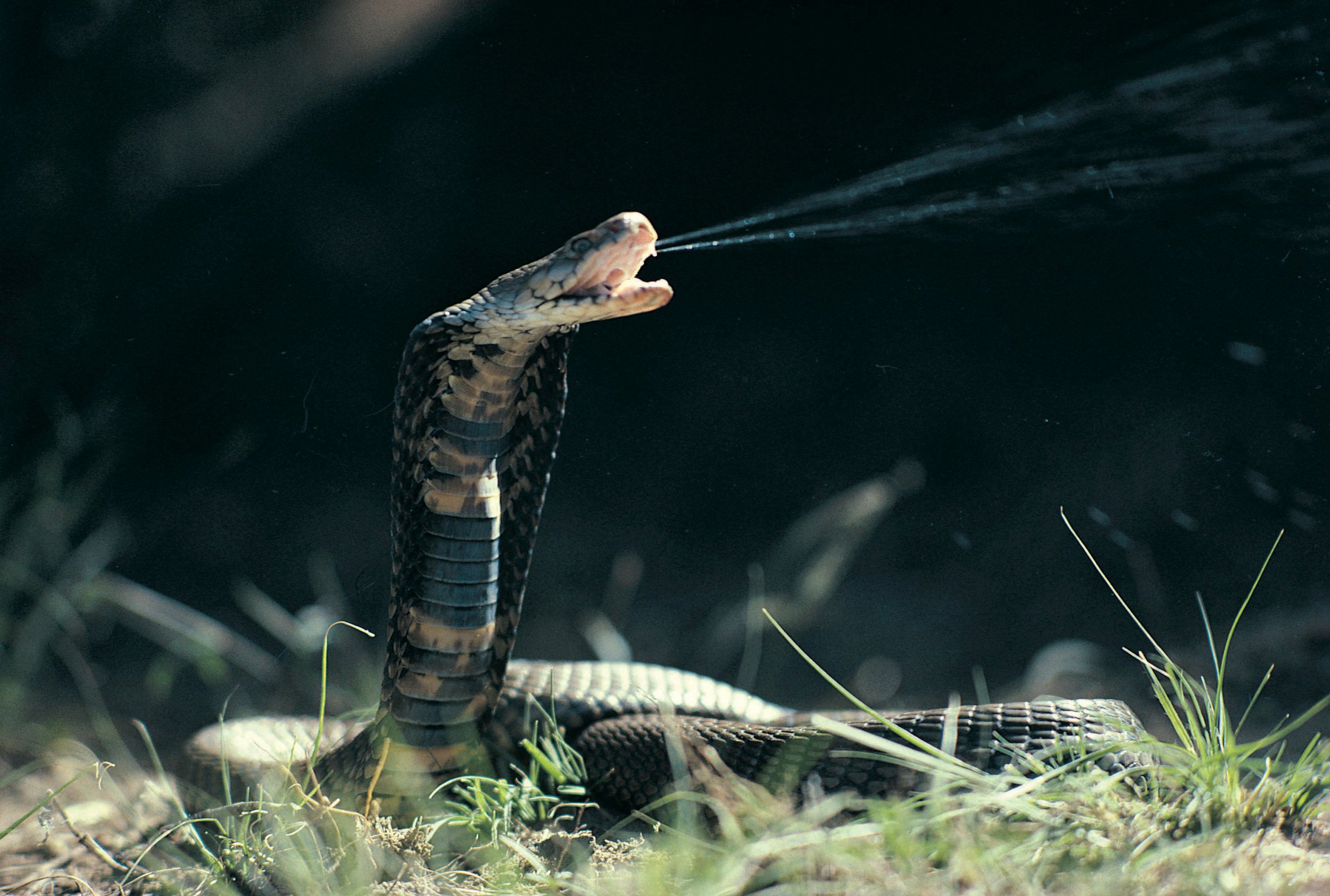
(Picture by Getty Images)
I share this because I think it is important that someone who works in this field honest about it. Not because it is comfortable — it isn't — but because the silence around it is part of the problem.
I have been in enough of those moments to know they are more common than anyone in this field admits. In my experience, how leaders think they will respond in a crisis and how they actually respond are rarely the same thing, and this is not discussed often. It stays unexamined partly because naming it feels dangerous. If I freeze, what does that say about me? If I go blank, am I fit to lead?
These are the wrong questions.
Our crisis response is not a verdict on our character. It is a pattern our nervous system learned, based on everything that has happened to us. And until we name these patterns honestly — in ourselves and with the people we work alongside — we cannot do much about them.
I have spent decades working in international disaster and conflict settings. I respond to fires as an active firefighter. I have delivered crisis capability workshops across Australia to leaders in organisations of every kind and supported organisations through all sorts of crises. But sometimes, under genuine pressure, my mind goes blank. If that is true for me, I am reasonably confident it is true for most of the people reading this.
This piece is about that recognition, what the science says about why it happens, and — most practically — what you can do about it when it matters.
What actually happens
When a genuine threat registers — a fire, a flood, a reputational crisis, a conversation that suddenly turns confrontational — the brain's threat detection system activates before the conscious mind has fully caught up.
The amygdala fires. Stress hormones flood the body. Attention narrows sharply to the perceived threat. Working memory degrades. Time distorts. Cognitive biases that are manageable under normal conditions — confirmation bias, action bias, the tendency to lock onto the first plausible explanation — all intensify. The result is a version of yourself that is simultaneously more activated and less capable than your normal operating state.
People respond to the same threatening situation in radically different ways. These reflect patterns the nervous system has learned, based on history, training, accumulated load, and the specific conditions of the moment. Understanding those patterns — in yourself and in the people around you — is one of the most practically important things a leader can do.
Five responses are worth understanding.
Fight is the confrontational response — the impulse to push back, assert, escalate. Under pressure it can look like decisiveness. It can also produce aggression, premature closure and decisions made before the situation is understood.
Flight is the withdrawal response — the impulse to escape, avoid or defer. It can look like prudent caution. It can also produce delay, abdication and the chronic postponement of decisions that need to be made.
Freeze is the blank mind. The system going offline when active response feels unavailable. Not passivity — protection. And more common among experienced leaders than anyone admits.
Fawn is the appeasement response, and the most self-concealing of the five. It uses the tools of connection — empathy, attentiveness, agreement — in the service of managing threat rather than genuine relation. From the outside it looks like your best qualities. From the inside it is driven by fear. The leader who over-consults, over-explains and over-accommodates during a crisis may not be being collaborative. They may be fawning — and the decisions that emerge from that state tend to reflect what reduces social discomfort rather than what the situation actually needs.
Flow is the response people want. The state of absorbed, competent action where deliberation disappears and performance feels almost effortless. It is not luck. It has preconditions, and some of them are trainable. We will return to this.
Your crisis response is not your character. It is a pattern your nervous system learned. And because it is learned, it can be understood, interrupted and — with the right practice — changed. But only if you know what your pattern is.
Another thing that science tells us: experience helps, but not unconditionally. The psychologist Gary Klein spent decades studying how experts — firefighters, military commanders, intensive care nurses — actually make decisions under pressure, and his finding was counterintuitive. Experts don't deliberate more carefully than novices. They deliberate less. They recognise the situation as familiar, simulate a course of action, and if it fits, they act. This is pattern recognition built through genuine exposure and reflection — not intuition as guesswork, but the nervous system drawing on a library of situations it has encountered before.
The problem is that pattern recognition fails in genuinely novel situations. When the situation doesn't match anything previously encountered, the system reaches for its library and finds nothing. The blank mind arrives precisely at that point. Novel crises, compounding pressures, situations that exceed previous experience — these are exactly where experienced practitioners are most vulnerable, because they have built confidence in their pattern recognition and then discover it isn't available.
This is also why crisis response can change across a career. The practitioner who acted instinctively at thirty and freezes at forty-five is not weaker. Cumulative exposure changes the nervous system. Role complexity multiplies the possible right answers while removing the practiced pathway to any of them. And sometimes what looked like confident instinctive action in earlier years was partly the product of emotional suppression — a capacity to disconnect from the full weight of what a crisis means for the people in it — that, as experience and emotional integration develop, becomes less available. Knowing this is part of knowing your pattern.
Know your pattern
Self-knowledge is the foundation of everything that follows. Not because different responses require entirely different techniques, but because knowing which response is active in you — in this moment, under this kind of pressure — is what allows you to recognise it quickly and interrupt it before it runs the show.
A few questions are then worth genuinely pondering. Under real pressure — not managed inconvenience, but actual stakes — do you tend to go blank? Do you tend to become reactive, confrontational, or sharp in ways you later regret? Do you find yourself over-explaining, over-accommodating, agreeing with people when you don't actually agree? Do you withdraw, defer, or find reasons to delay?
Most leaders have had enough genuine pressure to know, at some level, which of these tends to show up. What is less common is honest reflection on it — because the professional context makes self-examination feel risky, and because in the moment, the response always feels justified. The freeze feels like careful consideration. The fawn feels like good leadership. The fight feels like decisiveness. Naming what is actually happening, to yourself and to others, is harder than it sounds but really valuable.
One of the primary purposes of realistic scenario-based training is to create the conditions for that self-knowledge to develop safely — before the real crisis arrives. What you discover in a simulation is far less costly than what you discover for the first time in the field.
How to decide under pressure
The five steps that follow form what I call the RODCA framework — Regulate, Orient, Decide, Communicate, Adapt. They are not a linear process but a loop you will cycle through repeatedly as a crisis unfolds and conditions change. Their value is their simplicity — simple enough to remain available when deliberate cognition is most compromised.
Step one: Regulate
Before any decision is possible, the nervous system needs a moment of reset. The instinct under pressure is to speed up. That is when mistakes compound.
A deliberate pause of a few seconds is enough. The STOP technique formalises this: Stop, Take a breath, Observe, Proceed. But the breath is worth doing properly. Take one or two slow breaths with a longer exhale than inhale — this is not symbolic. A longer exhale activates the parasympathetic nervous system, directly dampening the stress response. While you breathe, relax your shoulders and unclench your jaw. These small physical acts are direct signals to the nervous system that the immediate threat is survivable, and they restore enough cognitive function to make the next step possible.
Managing your own state is not a soft concern. Your breathing, your tone of voice, your visible composure — or lack of it — directly shapes how the people around you respond. Regulating yourself is regulating the room.
Step two: Orient
Once regulated enough to think, the next move is not to decide but to orient.
There is one sentence worth internalising before the crisis arrives rather than trying to construct during it: Protect people, stabilise the situation, then solve the problem.
It forces an immediate hierarchy. Everything will feel urgent but most of it isn't. This sentence tells you what order to move in when everything is demanding attention simultaneously — whether the crisis is a fire, a flood, a cyber attack, a reputational emergency or an internal organisational breakdown. It is simple enough to survive the cognitive conditions that genuine pressure produces.
From that anchor, ask two questions: what is the most important outcome right now, and what do I know versus what am I assuming? Then actively check the story your brain has already constructed. Under stress, the mind locks onto an explanation quickly and defends it. A single question — what if we're wrong about what's happening? — is often enough to keep that story provisional rather than fixed. You don't need a full analysis. You need just enough scepticism to avoid committing blindly to a flawed picture.
Step three: Decide
Make the next decision, not the perfect one.
You will not have enough information. Waiting for certainty is often the real risk. Shift the standard — not is this the right decision, but is this a reasonable next step given what I know? If the action is low risk and reversible, act.
Then verbalise the decision — say it out loud, even briefly: “based on what we know, we are going to do this”. Verbalising does two things: it clarifies your own thinking, and it allows others to challenge or refine it immediately. Silent decision-making under pressure increases error rates. The act of articulating a decision, even imperfectly, is itself a quality-control mechanism.
Step four: Communicate
A decision made but not transmitted is not a decision — it is a thought. Communication under pressure degrades fast, which means the standards that work in normal conditions are insufficient.
Keep it short, concrete and repeatable: what is happening, what we are doing, what people need to do next. If people are confused, your decision will not translate into action regardless of how good it was.
Use your team and do not become the bottleneck. A common failure mode under pressure is over-centralisation — leaders absorbing all decisions because the stakes feel too high to delegate. Assign clear roles. Delegate decisions where possible. Your job is not to do everything. It is to maintain direction and coherence while others execute.
Step five: Adapt
Every decision in a crisis has a short shelf life.
The situation is moving. Your initial assessment will be partially wrong. Build in a rhythm: act, check what changed, adjust. You are managing a moving system, not executing a fixed plan. The leaders who perform best under sustained pressure are not those who make the best initial decision, but those who update fastest as reality reveals itself.
Watch for the traps that slow adaptation: pushing ahead when the plan has stopped fitting, defending an assessment you have publicly committed to, filtering out information that contradicts your current picture. Each of these is a predictable failure mode. Recognising them in yourself — even briefly, even imperfectly — is often enough to interrupt them.
Flow as the destination
Everything described above is in service of “flow”, a state most leaders have experienced at least briefly — and that the research suggests is more accessible than most people assume, though never guaranteed.
Flow in a crisis is not calmness in the usual sense, but a functional engagement under pressure. You are still physiologically activated — the stress hormones are still present, the heart rate is still elevated. The difference is that the activation is channelled into focused action rather than scattered or paralysed response. You are not calm. You are present, clear and moving.
That shift depends on two things: preparation, so the situation feels recognisable enough that the nervous system doesn't treat it as catastrophic; and regulation combined with structure in the moment, so you can act despite incomplete information. The five steps above are designed to provide exactly that — a practiced structure that reduces the cognitive load of deciding how to respond, freeing capacity for the response itself.
The research identifies three preconditions for flow: a challenge-skill balance where the demands feel matched to your ability, clear goals, and unambiguous feedback about whether your actions are working. Training builds the challenge-skill balance by making high-pressure conditions feel familiar rather than overwhelming. The go-to sentence (Protect people, stabilise the situation, then solve the problem)provides the clear goal. Staying attentive to what the situation is telling you — actively seeking feedback rather than waiting to receive it — provides the third.
Importantly, training for flow does not eliminate freeze, fight, flight or fawn. Those responses are part of how the nervous system works and they will show up. What consistent practice does is shorten their duration — you recognise the response faster, interrupt it sooner, and return to effective action more quickly. In real crises, that is what actually matters. Not the absence of the automatic response, but the speed with which you regain control of it.
You are not aiming to be right. You are aiming to stay effective as the situation evolves. With enough practice, the five RODCA steps stop feeling like a checklist and start feeling like second nature. And in the best moments — when preparation, structure and presence align — something closer to flow becomes possible.
The blank mind is not the end of the story. It is the beginning of knowing what to do about it.