What can we learn from the sweltering heat in Europe?
In brief: On what Europe's heatwaves reveal about the gap between forecasting a disaster and preparing for one, and what an unusually warm Australian winter may be setting up.
I'm worried about family and friends in Europe. Some of them are into their third serious heatwave in a few weeks. As my mum wrote in our family WhatsApp group, "we are melted, liquefied."
The numbers coming out are worse than the coverage suggests. France recorded 2,025 excess deaths across June. Spain more than a thousand, in its second-hottest June ever. Germany's figure, released this week, is around 5,000 for the last fortnight of the month alone. I suspect they will all rise. Most died indoors.
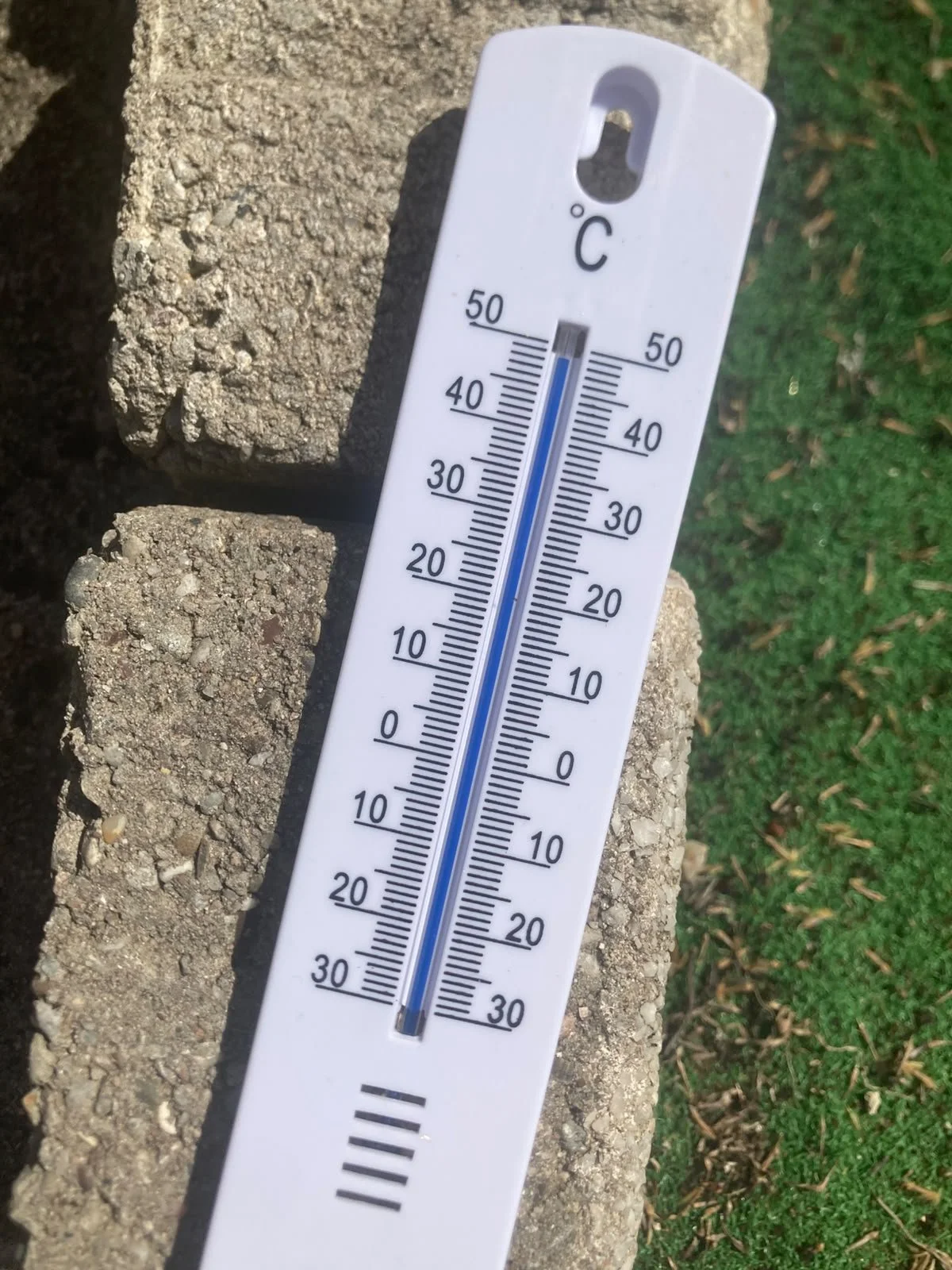
(Picture taken by mum, in her garden, France)
You would be forgiven for assuming the danger is the afternoon peak. It isn't, mostly. The body can shed heat across a hot day, if the night lets it. Under a heat dome the overnight cooling cycle doesn't complete, and cities hold what forecasters call tropical nights. When France set its record on 24 June, the number that mattered was the new national overnight minimum of 22 degrees, not (just) the 43.8 recorded in the west of the country.
WHO Europe reviewed the response two days ago. The countries that coped had a plan that already specified who was responsible for what, which people were most at risk, and at what temperature each level of response switched on. Fewer than half the countries in the region have one yet everyone knew the heat was coming.
There is a limit beyond which none of this can be managed, which is known as wet-bulb temperature. This is what the thermometer reads once you account for humidity, and it’s hugely important because evaporation is the only cooling system the body has. Sweat that cannot evaporate does nothing. The long-standing theory held that above 35 degrees wet-bulb, a healthy person sitting in the shade with unlimited water will die within hours, because there is nowhere for their body heat to go. Laboratory work at Penn State has since tested that number on actual people and found the real threshold lower, closer to 30 or 31 degrees in humid conditions for young, healthy adults doing almost nothing. Europe's heat is dry, so this is not what is killing people in Paris. It is what will kill people in Darwin.
Which is where my thinking turns toward here. Sydney and Melbourne have both had their warmest starts to winter on record. The Bureau is forecasting a strong to very strong El Niño, and gives eastern NSW better than an 80% chance of maximum temperatures in the warmest fifth of the historical range through September. Dry soil can't spend the sun's energy on evaporation, so it heats the air instead, which is one of the reasons a dry winter tends to build the summer that follows it (though there are other reasons and I'm compressing a lot of atmospheric science into a sentence!).
So I went looking at what heat has already done to us, expecting to find we're better prepared than Europe, on the grounds that we're used to it.
Heatwaves have killed more Australians since 1890 than bushfires, cyclones, earthquakes, floods and severe storms combined. Of the 354 heatwave deaths reported to a coroner between 2001 and 2018, 244 happened in or near a building, and in about half the cases the person was going about business as usual. A survey of at-risk residents in Western Sydney and on the NSW North Coast, which is where I live, found 45% don't act on heatwave warnings, because they didn't think it necessary or didn't know what they were supposed to do.
The Commonwealth's own climate risk assessment, published last year, projects heat deaths in Sydney rising by 444% under 3 degrees of warming this century. Darwin 423%. Perth 312%. Which means the forecast isn't the missing piece. We have the forecast.
The forecast however, is also a variable. What follows in this article looks at how to manage the heat we have already committed to. But the wet-bulb threshold is not a fixed feature of the world but a function of how quickly we stop burning fossil fuels. Put simply, the quicker we phase-out from fossil fuel, the better.
As it isn't as though we're short of things to do already. Retrofitting the homes people actually die in, and making at least one room in them survivable. Creating cooling refuges and a system that knows in advance who needs to get to one, who needs transport, who needs a phone call, and who needs someone to knock on the door. Working bees to help the people who cannot prepare their own homes for heatwaves and subsequent bushfires: clearing gutters, installing shade cloth, checking fans, sealing draughts, testing batteries, filling water containers, making sure the fridge and the medication plan will hold. Heat-safe schools, heat-safe workplaces, shaded bus stops, drinking-water points, cool roofs, minimum standards for rentals and aged care, and emergency communications and backup power for when the grid drops out on a 42-degree day, which is exactly when it does. Community plans, disaster education in schools, psychological first aid, food security, transport for the isolated, and trees on the streets that have none. None of this is speculative, and a good deal of the harm is preventable.
My concern is that this summer we find out how much we are really prepared.