What the war in Iran reveals about system shocks and cascading risks
In brief: This article explores how the current war involving Iran can be understood as a system shock, with cascading effects across energy markets, supply chains, geopolitics, and public health. Rather than viewing such crises as isolated events, it argues that they propagate through interconnected systems, creating ripple effects far beyond their point of origin. In this context, the challenge for leaders and organisations is not only to respond to immediate impacts, but to develop the capacity to anticipate, interpret, and navigate cascading risks in an increasingly unstable global environment.
Over the past few years, many of the leaders I work with have asked a similar question. A geopolitical crisis appears in the news, markets react, supply chains shift, and uncertainty increases, yet for organisations operating in relatively stable countries such as Australia it is often unclear how seriously these events should be taken or what they might mean in practice. The current conflict involving Iran has prompted this conversation again. While the immediate focus is understandably on the geopolitical dimension of the war, the situation also raises a broader question about how global shocks propagate through interconnected systems and eventually affect organisations that initially seem far removed from the crisis itself.
Crises are still commonly discussed as if they were isolated events. A war unfolds in one region, a pandemic spreads across borders, a financial disruption affects markets, or a disaster damages a particular community. Yet recent experience increasingly suggests that many modern disruptions behave less like discrete incidents and more like system shocks. Because global systems are tightly interconnected, disturbances rarely remain confined to their point of origin. Instead, they move across energy markets, supply chains, health systems, political relationships, and the everyday functioning of organisations and communities.
COVID provided a clear illustration of this dynamic. What began as a public health emergency quickly affected global logistics, labour markets, government policy, economic stability, and the psychological environment in which people lived and worked. The lesson was not simply that a pandemic could disrupt societies, but that disruptions can propagate rapidly through the complex networks that underpin modern life.
The war in Iran illustrates a similar pattern. Although it is fundamentally a geopolitical conflict, its implications extend into multiple systems that shape economic and organisational stability. One of the most immediate ripple effects concerns energy markets. Tensions affecting major oil and gas producing regions can influence global energy prices, which in turn affect transport costs, food prices, and the broader cost of living. Organisations dependent on logistics, travel, or energy-intensive production already experience these pressures indirectly through higher operating costs and increased economic uncertainty.
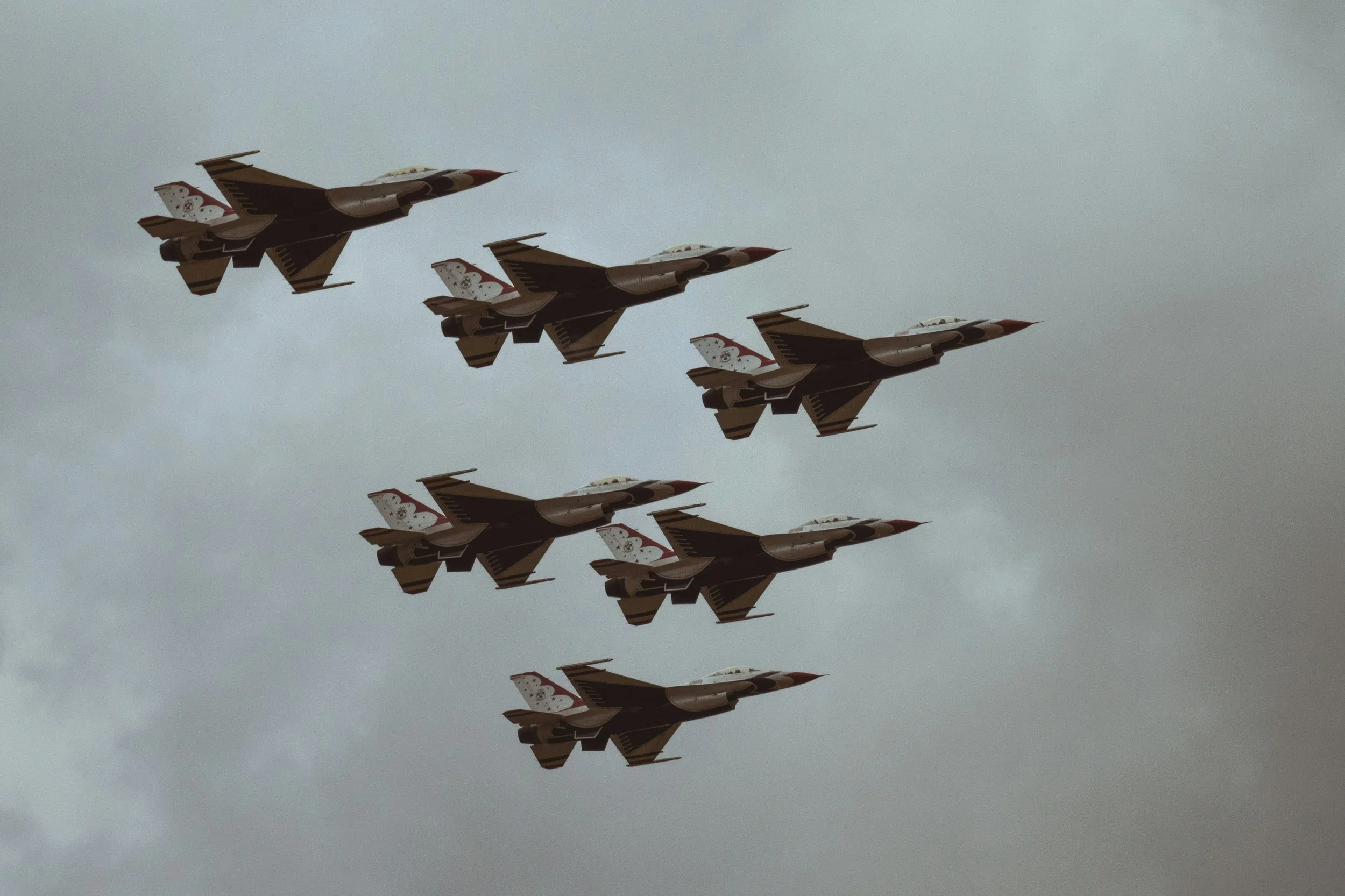
(Photo by Ux Gun)
Supply chains represent another pathway through which system shocks propagate. Rising insurance costs, transport disruption, or instability affecting shipping routes can alter the flow of goods and materials across international markets. Businesses that rely on predictable delivery schedules may encounter delays, shortages, or increased costs. These disruptions rarely appear dramatic in isolation, yet their cumulative effect can alter planning horizons and operational decisions across industries.
Even sectors that appear unrelated to geopolitical tensions can feel indirect consequences. One example concerns helium, a critical resource used in MRI machines for medical imaging. Much of the world’s helium supply is produced as a by-product of natural gas extraction, including in parts of the Middle East connected to global shipping routes through the Strait of Hormuz. When conflict disrupts energy production or threatens maritime transport through the strait, the export of gas and associated by-products such as helium can be affected. Over time, these disruptions may constrain the availability of MRI capacity in some health systems, potentially delaying certain diagnostic screenings and creating downstream implications for public health.
At the geopolitical level, conflicts also influence the strategic calculations of other governments observing the situation. For example, a prolonged crisis in the Middle East may reshape energy markets in ways that benefit major producers such as Russia, strengthening its revenues and potentially reinforcing its capacity to sustain the war in Ukraine. At the same time, the diversion of diplomatic attention and military resources toward the Middle East may alter how other powers interpret the balance of global priorities. China, for instance, may reassess the strategic environment in the Indo-Pacific, including the degree to which international responses to territorial disputes might constrain or enable its actions regarding Taiwan. None of these developments can be predicted with certainty, yet they illustrate how geopolitical conflicts can generate ripple effects across the wider international system.
For organisations, the consequences of system shocks extend beyond markets and political developments. They also shape the psychological climate in which people work. When crises accumulate over time, whether through pandemics, climate disasters, geopolitical tensions, or economic instability, individuals often experience a growing sense of uncertainty and fatigue. Disinformation and competing narratives can further complicate people’s attempts to interpret events, while the constant flow of global news contributes to what might be described as a form of collective cognitive load.
Inside organisations, this cognitive environment can have subtle but real consequences. Teams may find it harder to maintain focus, attention may become fragmented, and employees may carry a background sense of instability about the wider environment in which they are working. Even when a crisis appears geographically distant, the atmosphere it creates can still influence how people interpret risk, security, and the future.
One of the challenges for leadership in these circumstances is the tendency to treat global disruptions as distant events that do not require organisational attention. In relatively stable societies such as Australia, geopolitical conflicts can sometimes appear remote from everyday operations. Yet the interconnected nature of modern systems means that global shocks often reach organisations indirectly through economic pressures, operational disruptions, or changes in the broader environment.
This is where sensemaking becomes an important leadership function. Sensemaking involves helping people interpret complex and uncertain situations. It does not require leaders to predict the future or provide definitive answers. Rather, it involves acknowledging uncertainty, situating events within a broader context, and helping teams understand how external developments may relate to their work and organisational environment.
In the absence of this shared interpretation, individuals often attempt to make sense of events on their own through fragmented information sources, which can increase confusion and speculation. Leaders who engage in sensemaking help stabilise their organisations by providing context and clarity, even when the full implications of a situation remain uncertain.
Responding to system shocks therefore requires more than crisis response plans. It calls for a broader leadership mindset oriented toward resilience. Resilience, in this context, is not simply the capacity to recover from disruption, but the ability to operate effectively in environments where disruptions are likely to regularly occur and interact with one another.
Several practical implications follow from this perspective.
First, leaders increasingly need to interpret events systemically rather than in isolation. Understanding how shocks propagate through interconnected systems helps organisations recognise potential ripple effects before they become operational problems.
Second, organisations must remain attentive to the human dimension of cascading disruptions. Recognising the cognitive and emotional pressures associated with persistent uncertainty can help leaders support their teams through clear communication and realistic expectations.
Third, resilience needs to be embedded in organisational thinking and design. This includes examining supply chain dependencies, operational flexibility, and decision-making processes in environments where stability cannot be assumed anymore.
Global disruptions will continue to occur, whether through geopolitical conflicts, climate events, economic instability, or technological change. In a tightly interconnected world, these shocks will increasingly interact with one another and produce ripple effects that reach far beyond their original context.
For many organisations, the effects of these disruptions appear gradually rather than dramatically. They emerge through rising costs, shifting markets, distracted teams, or the quiet uncertainty that accompanies an unpredictable environment. The question worth asking is therefore not only what is happening in the world, but where the ripple effects may already be appearing within our own organisations and communities, and where greater awareness, clearer communication, or stronger support might already be needed today.