Why we need to bring disaster resilience and climate adaptation closer together
In brief: Disaster resilience and climate adaptation do different work. One helps a community get through the next flood or fire; the other asks what has to change so the next disaster does less harm. At the level of ideas they have converged, but the people who do the work, and the budgets and timeframes they answer to, mostly still sit apart, and a good deal of our future risk lives in that gap. This piece explains why the two belong in the same room.
For some years I have worked at both ends of disaster. At one end are the first minutes, hours and days, the world of emergency and disaster management, when the forest is alight or the floodwater is still rising and the community hall has been unlocked before anyone has worked out who is in charge. At the other, the world of climate adaptation, with much longer timelines, where planning schemes, housing policy, insurance and adaptation pathways are debated in meeting rooms, to decide what we are building for the decades ahead.
At the level of ideas, the two ends have been converging for a while. The IPCC's 2012 report on extreme events tied disaster risk reduction to climate adaptation, and the Sendai Framework, which is the UN roadmap for countries to prevent new and reduce existing disaster risks, treats climate as a driver of disaster risk. The ideas have met, but the institutions, and the people inside them, mostly have not, divided as they are by expertise and career path, by timeframe and by the constraints each works under. One set works on the next disaster event, another toward 2050; one knows who is exposed and which road goes under first, the other holds the levers over land use, building standards and managed retreat (which is a proactive, planned strategy to permanently relocate people, structures, and infrastructure away from areas vulnerable to environmental hazards).
In that separation a good deal of our future risk accumulates, as if we were being asked to mop the floor while the conversation about the leaking roof happened in another building.
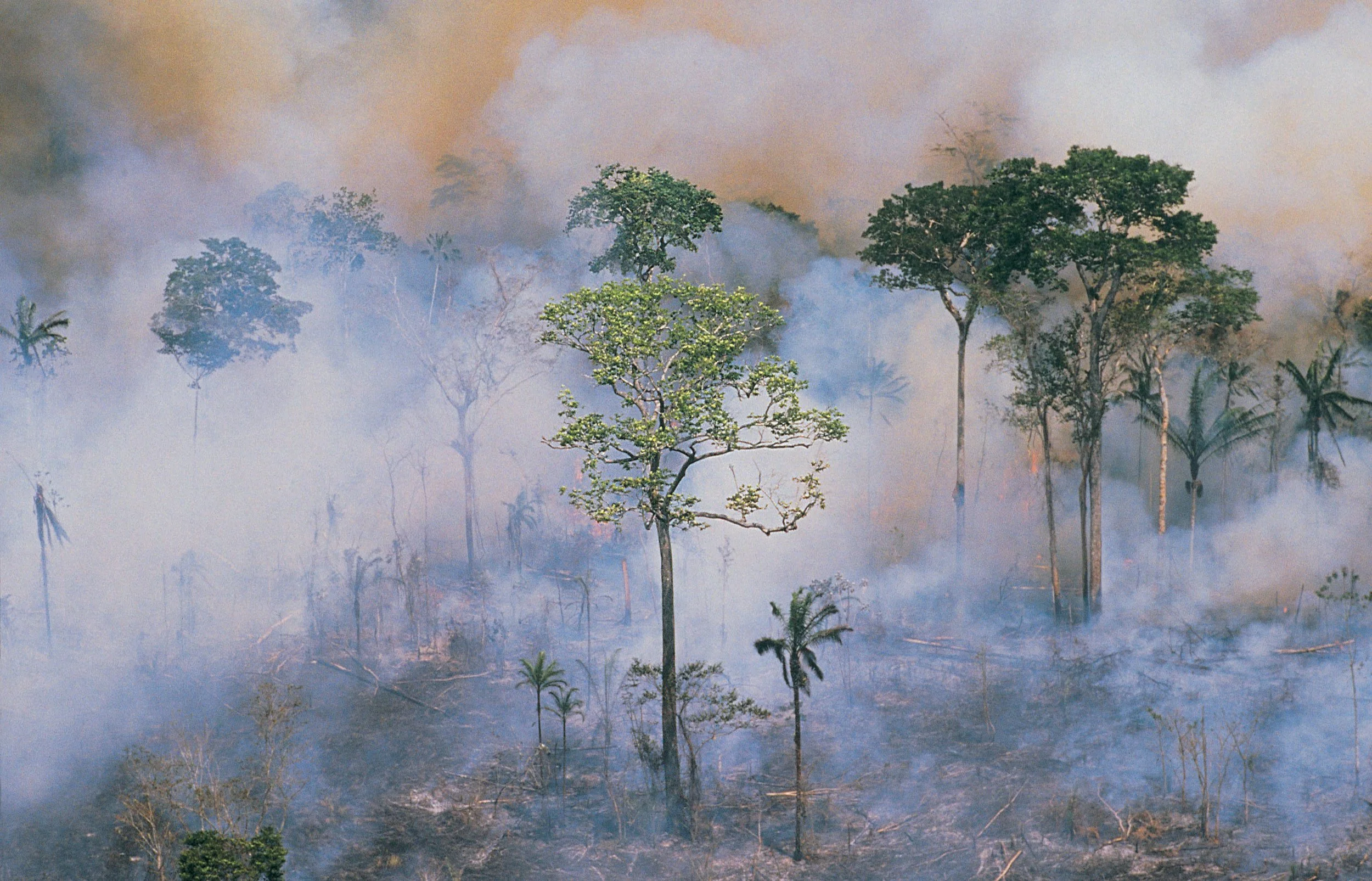
(Picture by Getty Images)
The work of getting through
The near work goes by several names. In its formal guise it is emergency and disaster management, and more broadly it is resilience. In ecology, Holling used the word ‘resilience’ to distinguish a system that returns to equilibrium after a disturbance from one that can absorb the disturbance and reorganise while keeping its function; later scholars extended it to social systems, to describe a society's capacity to absorb a shock and then adapt.
On the ground, though, resilience seldom looks like a definition. It looks like the person who knows which neighbour has mobility issues and will need help early, or the firefighter who knows a road marked accessible becomes a creek after heavy rain. There is real intelligence in this, and in the first hours it can be the difference between a system that bends and one that breaks.
When resilience becomes a loop
But resilience also carries an ambiguity that has not escaped those who have been caught in one disaster after another. In everyday language it means bouncing back, a fine thing to see in a household or a landscape, though in public policy it can become a trap the moment it is used to praise coping while ignoring the amount of support they need, or what people are being asked to bounce back to. Often it is back to housing that will flood again and insurance they can barely afford, in other words, to the same exposure as before with nothing changed but the emergency kit.
This is where resilience turns conservative, not in the political sense but the structural one, good at helping a system survive and less good at asking whether the system produces the harm. As communities grow more practiced at enduring events that need not be inevitable, and volunteers more tired at once, emergency services and community networks holding it together are left to make up for the consequences of decisions taken elsewhere. That burden is carried unevenly, heaviest on those with the least room to move, the renters and carers, the people on casual wages or without secure cover. Offered without any path to reducing exposure, resilience becomes an additional burden to endure.
Bringing the future into the room
Climate adaptation changes the question. It begins from the recognition that the baseline is moving, that the future will not be a warmer copy of the past, and that the hazards themselves are changing in frequency and force, sometimes in ways that are not linear, as we are beginning to see across the planet. The IPCC describes adaptation as adjusting to actual or expected climate and its effects, to reduce harm or seize any opportunity that opens up.
That is larger than emergency response can hold, reaching into what we build and protect, what we stop approving, and what we may have to move or let go. None of these are easy conversations, because a house is never simply an asset, and people live inside the decisions we make. This is why adaptation cannot stay abstract, or wait for a later decade: it is a discipline of the present, but where the future enters through the choices being made now.
The risk of maladaptation
Adaptation has a difficulty of its own. Because it works through models and maps and plans, it can drift from the lives it means to serve, so a strategy ends up technically elegant but socially thin, describing future risk without changing present capacity. There is a sharper danger too, which Barnett and O'Neill call maladaptation: measures meant to reduce climate risk that end up deepening vulnerability or pushing it elsewhere. A seawall, for instance, can protect one stretch of coast while worsening the erosion along the next. The useful question runs deeper than whether a measure reduces risk in general: whose risk falls and whose rises, and who is left holding what remains once the deciding is done. This is where people who work close to disaster have most to offer, because they know how a plan behaves once it meets the ground.
This would ask whether the action could unintentionally shift risk onto another community, worsen inequality, encourage new development in risky places, damage ecosystems, undermine First Nations rights, increase long-term dependency, or protect assets while leaving vulnerable people behind. This would be particularly important for major mitigation infrastructure, development controls, relocation decisions, housing policies and economic recovery investments.
Where the two meet
None of this is about choosing between resilience and adaptation, since we need both, and each corrects the other's failings. Resilience on its own can settle into forced endurance with no way out, while adaptation on its own can produce strategy with no roots in a place. Adaptation lends resilience a longer horizon, turning the question from how people get through the next flood toward how the conditions behind it might change before the one after. Resilience lends adaptation its footing, since no plan is carried out by a community in the abstract, but by particular people and the trust built up over years.
Their clearest meeting point is social infrastructure, the relationships and local institutions through which people coordinate and act together. Some of it is easy to see, in libraries and halls and neighbourhood centres; some is harder, in reciprocity and local leadership and the confidence to knock on a stranger's door. Recovery research finds that communities with stronger social ties come through disasters better, and Eric Klinenberg has argued that social infrastructure deserves being treated as infrastructure in its own right, rather than as the soft accompaniment to the solid kind. If we fund a bridge because it lets people move, the local organisation that brings people together earns the same standing, because it is what organises people when everything else is failing.
The connective tissue of a place
The Northern Rivers showed this plainly through the 2022 floods, when neighbours and informal responders, neighbourhood centres and community halls, volunteer networks and local media and trusted local leaders were, in effect, the region's first disaster infrastructure, often first to respond and last to leave. Public policy still tends to fund the physical and assume the social. The risk in that is obvious once you have watched a place hold itself together with the second while the first has failed.
To say this is not to shift responsibility onto communities. If anything the reverse is true. Disaster resilience, and in particular community-led resilience, needs to be funded and supported well before disasters, not only propped up during recovery. Local communities cannot be expected to fill the gaps left by underinvestment, fragmented governance or a slow formal response.
It also helps to treat local capability as something to be built and mapped, not only assumed. Adaptation planning tends to map hazard and exposure well and local capacity poorly, yet a town's ability to get through the next event rests on ordinary things: a known risk profile, an agreed set of safe places, a way to check on the people who might be missed, and trained local connectors with a working line to council and emergency services. Mapping that capability means counting the formal assets, the rural fire brigades and the SES, the health services and evacuation centres, the roads and energy and communications networks, but also the informal ones the formal map usually omits, the trusted leaders and organisers, the local community resilience group, the food networks and farmers, the cultural and youth and faith groups, the disability advocates and First Nations networks that carry a place when the lights go out.
There is also the matter of what repeated disaster does to the people who keep showing up. Many in the Northern Rivers are carrying cumulative trauma, and the volunteers and workers and responders asked to be resilient are often the most depleted. Adaptation that took this seriously would be trauma-informed, treating grief and fatigue, distrust and burnout as part of the region's actual adaptive capacity rather than as recovery footnotes, since a community's emotional reserves are as real a resource as its roads.
The question of fairness
Then, there is also a question of fairness. Risk is not spread evenly, because vulnerability is not; it is made rather than given, produced by decisions about housing and income, land use and insurance, and political voice. People living in a flood zone are often the ones who can least afford an insurance. The hazard may be natural; the disaster is always partly social. So when the people who carry the exposure are absent from the rooms where it might be reduced, a choice has already been made on their behalf, and risk settles wherever power is thinnest.
There is something uneasy, too, in celebrating a community's resilience while leaving it to absorb risk that could have been reduced. Preparedness is real and necessary work, and it was never going to stand in for prevention. But preparedness without long-term considerations about how to ensure people and Country are removed from harm’s way in the first place is equally important.
This is why joining disaster resilience and climate adaptation cannot stay a technical exercise: it has to carry questions of equity and authority from the start. In particular, it has to make room for the authority and knowledge of First Nations communities in relation to Country, against a long habit of treating Country as a passive surface for risk rather than as living and relational. Further, practices such as cultural burning, caring for Country and the management of cultural landscapes are not tools to be folded into a government plan without proper authority and resourcing, and without protection for cultural knowledge; they belong to Traditional Owners, and adaptation is stronger where it is clear how First Nations organisations will help make the decisions, and not only be consulted on them, and how different Nations across a region will be recognised and resourced. Seen this way, adaptation is a question of custodianship and justice as much as a technical one.
Fairness is easier to hold onto when it is written into how decisions are judged. Climate adaptation would be strengthened by an explicit principles framework to guide the assessment of actions and ensure consistency across agencies, councils and communities. Such a framework might include principles such as: do no harm; avoid creating new risk; prioritise those least able to adapt through private means; recognise First Nations self-determination and cultural authority; protect social as well as physical infrastructure; support community-led resilience without transferring government responsibility onto communities; regenerate ecological systems; be transparent about trade-offs; maintain public accountability over time; and avoid maladaptation.
On this, a related consideration would be that each major proposed climate adaptation action should be tested against a maladaptation screen. This would ask whether the action could unintentionally shift risk onto another community, worsen inequality, encourage new development in risky places, damage ecosystems, undermine First Nations rights, increase long-term dependency, or protect assets while leaving vulnerable people behind. This would be particularly important for major mitigation infrastructure, development controls, relocation decisions, housing policies and economic recovery investments.
Climate adaptation could also make equity more practical by adopting a targeted-universalism approach: universal adaptation goals for the whole region, with targeted support for those least able to adapt privately. This includes renters, people in insecure housing, low-income households, people with disability, older residents, young people, First Nations communities, isolated rural residents, uninsured or underinsured households, small businesses and community organisations.
What this asks of emergency and resilience practitioners
For those of us in emergency management and community resilience, the shift is significant. Our task is still to help people get through, and always will, because the first post-disaster hours are real and capability saves lives. But alongside it sits another question: what are we helping people return to? A flood plan or a resilience network need not sit apart from decisions about housing, land use, drainage and insurance; it can be a doorway into them.
The knowledge gathered in disaster resilience is diagnostic as much as operational, showing where a system is brittle, where the water goes, and which so-called low-probability event has become a regular visitor. That knowledge needs to travel upstream, into the meeting rooms where exposure is decided, and be spoken plainly.
What this asks of adaptation practitioners
For those of us in climate adaptation, the shift runs the other way: less to write plans for communities than to really build them with those who will live inside them. Consultation counts for little once the choices that matter have been framed, and a strategy changes nothing until it moves real budgets and the conditions people live in. It helps if a plan can answer a few plain questions: who is safer once it is done and who might be worse off, and what it changes now rather than in a distant 2050. Those questions are easier to ask when social infrastructure is funded as part of the work rather than left to run on goodwill, and when a measure is tested for maladaptation before it is announced.
One of the more promising things I saw recently, working with the Banyule local council's Environmental Team in Melbourne, was it treating adaptation less as one team's plan than as a lens the whole organisation could use, with its adaptation team working alongside human resources and communications, customer service, operations and IT, helping each ask what a changing climate meant for the work it already did. The literature calls this mainstreaming, and in Victoria, the Municipal Association and the Greenhouse Alliances have pressed councils toward a whole-of-organisation approach, while the Victorian Climate Resilient Councils program was created to help build that capacity across services and operations. Widely recommended, it is still unevenly done, but carried into the enabling functions rather than left with planning and assets, it turns adaptation from a document into a habit of mind.
Two further habits would help. The first is to plan for compounding disaster events that arrive together rather than one at a time, since a place like the Northern Rivers rarely gets a hazard in isolation: a flood brings road closures and telecommunications failure and displacement in its wake, a heatwave arrives with power outages and pressure on the health system and the isolation of people who cannot leave a hot house. Testing an action against those cascades, across roads and energy and communications, housing and health and the organisations that absorb the overflow, tells you more than testing it against a single clean scenario.
The second is to treat managed relocation with the seriousness it demands, and well before particular decisions are forced. My region already knows the weight of buybacks and lost homes and uncertain futures. Relocation can offer safety when a place can no longer be made safe, yet done carelessly it produces trauma and dispossession, and a deeper unfairness than it set out to cure, so it needs principles agreed in advance: consent and who pays, renters as much as owners, mental health and social ties, connection to Country and the future of the land after a buyback. It is a social and emotional process as much as a property transaction.
The plans that do the most good are rarely the ones that describe the future beautifully; they are the ones that change the present wisely.
The plans now being drawn
Some of this thinking has been sharpened by the Disaster Adaptation Plans that the NSW Reconstruction Authority is now rolling out across the state, the Northern Rivers among them. The effort is welcome, and I have already put some of these considerations to the team working on it. Its strongest feature is the refusal to shrink disaster adaptation down to a single hazard, agency, dataset or technical fix. That multi-hazard framing is really valuable, because flood and bushfire, heatwave and landslide, coastal erosion and cyclone, storm and infrastructure failure are not separate problems in practice; they arrive tangled up with housing stress and insurance withdrawal, with road isolation and failing communications, with the strain on mental health and the fragility of local economies, and with plain inequality. Holding the built and the social, the economic and the natural together in one frame is indeed the right approach.
The opportunity now, as I see it, is to make the bridge between underpinning values, risk evidence, options and implementation much clearer. The public materials describe the process well, but it is not yet obvious how the technical data and the community's values, the local knowledge and the economic analysis, the equity considerations and First Nations governance, and in the end political judgement, will be weighed against one another when the hard choices arrive. That weighting is where everything crunches, because adaptation is never neutral: the same plan can protect people and places or, handled without care, shift the risk onto those with the least power to refuse it, or lean on First Nations knowledge without the authority that should govern its use.
Two halves of one task
Resilience and adaptation are not rival programmes or competing vocabularies but two halves of one public task: to help places live through what is already arriving while changing the conditions that would otherwise let the harm keep repeating. Resilience asks how we get through this; adaptation asks what has to change so it does not keep happening; and we need both questions at once.
If resilience comes to mean only the capacity to absorb one more shock, and then another, it becomes a hard and narrowing thing that asks too much of those already carrying too much. But if it grows to include the capacity to learn, to reduce our exposure, to strengthen our relationships, and to change course while there is still a course to change, it becomes something larger, closer to the agency of people who see the roof is leaking and reach for the mop as builders improve their roof. That larger capacity is what adaptation, at its best, tries to protect. The people in emergency vehicles who risk their lives to save strangers, those opening the community halls to spontaneously organise a community response, and those drawing the long-term plans are all working on one question about time: what kind of places do we want to still be here, and for whom, after many more of these events have come and gone?